Is Mount Etna Erupting? Volcanic Activity Guide
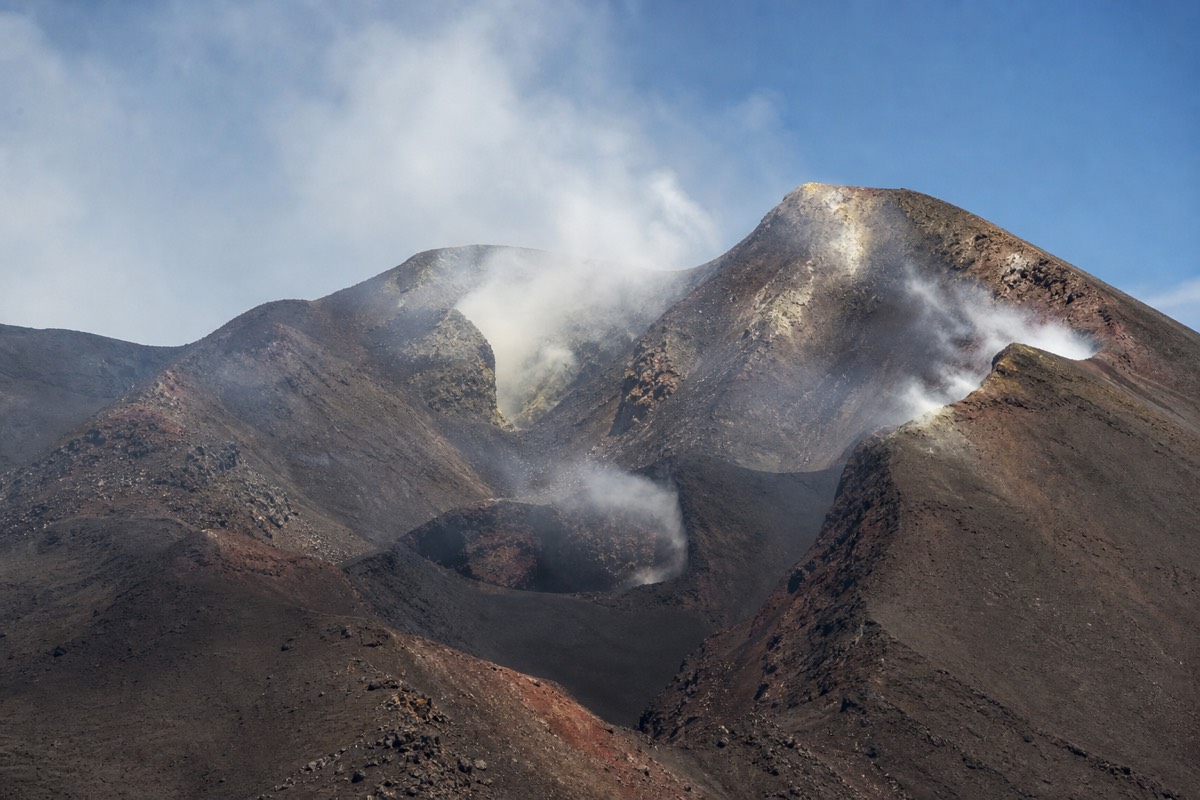
Etna puts out visible steam most days of the year, and sometimes ash. That is the volcano's normal state, and it is a different question from whether tomorrow's tour is running.
A city view or the lower craters may be enough. If you want to go further, compare the actual route, starting point and included transport before choosing a paid outing.
At a glance: This is a planning guide, not a live eruption bulletin. Check current official information and your operator; routes, altitude and departures can change.
Etna's activity levels, plain-language
A general explainer of how volcanologists describe activity levels, not a live status. For Etna's current status, check INGV's own bulletins.
Is Mount Etna erupting right now?
Etna is doing something on most days: degassing, a plume of steam, sometimes a burst of ash from one of the summit craters. That is the volcano's baseline behavior, not breaking news. Whether it counts as an "eruption" in the headline sense changes week to week, and the only source worth checking is INGV's Osservatorio Etneo, the Italian observatory that watches Etna full-time.
People searching this question are usually picturing lava rivers and evacuation orders. That version of Etna happens rarely and is well documented when it does. The version tourists actually encounter, on almost any given week, is a mountain that visibly smokes, occasionally pops with small strombolian explosions at the summit craters, and gets photographed for exactly that reason. Guides on the south side see this constantly and plan around it as routine weather, not emergency management.
A useful habit: treat "is Etna erupting" as a spectrum question, not a yes-or-no one. INGV bulletins describe current behavior in plain terms, things like ash emission height, whether strombolian activity is ongoing at a specific crater, or whether lava is confined to the summit area. None of that requires a geology degree to read, and it tells you far more than a two-year-old news article that ranks on page one of a search engine.
What does "active volcano" actually mean for Etna?
"Active" means Etna regularly produces observable volcanic activity, not that it is in a state of continuous crisis. Etna is one of the world's most closely studied volcanoes precisely because it erupts often enough to generate a long, well-documented record without threatening the scale of destruction some other active volcanoes carry.
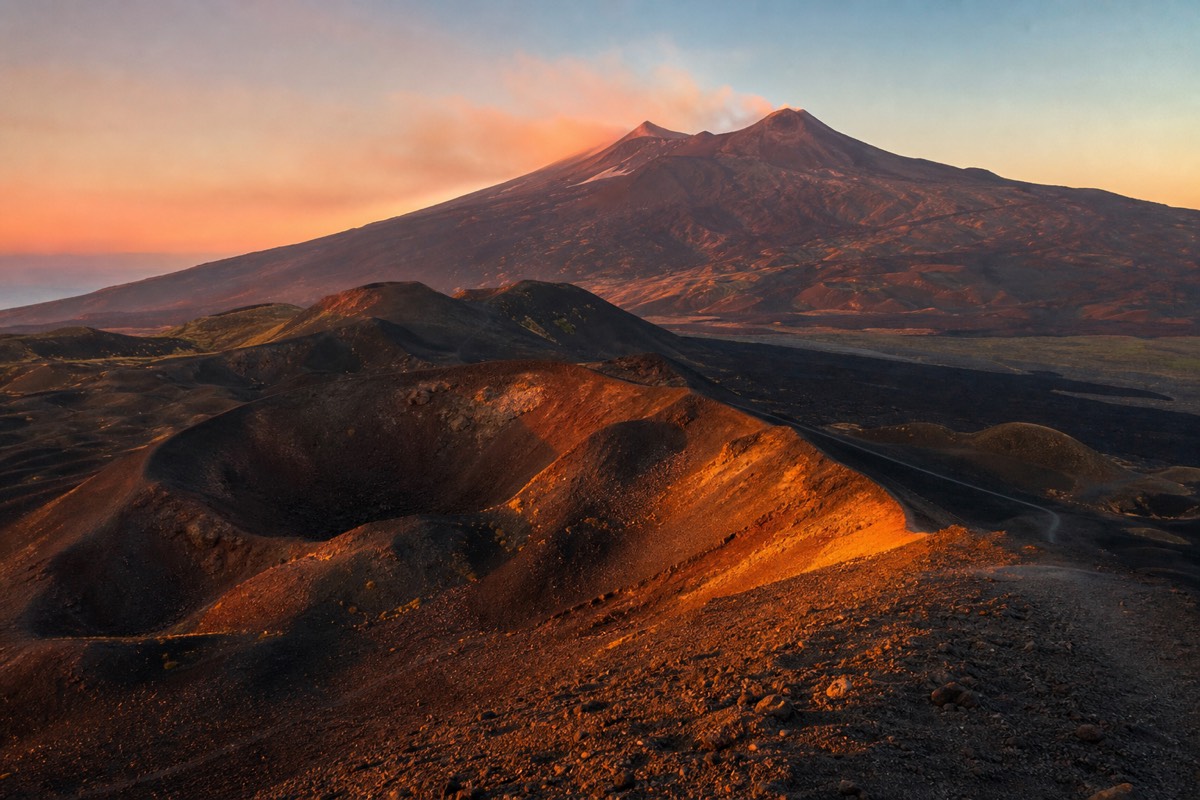
It helps to separate the words people use loosely. Not every puff of steam is an "eruption" in the technical sense, and not every eruption is dangerous to a visitor standing at a viewing platform a safe distance away. The table below gives a rough ladder of what "activity" can mean on Etna, from the state you will see on an ordinary Tuesday to the rare events that make international news.
| Activity level | What it looks like | How common | Typical effect on a visitor |
|---|---|---|---|
| Background degassing | Steam and gas plumes from summit craters, no explosions | Near-constant | None. This is what most photos of Etna show. |
| Strombolian activity | Small, rhythmic explosions throwing incandescent material a short distance above a crater rim | Common, especially at night | A dramatic sight from a safe distance; standard tours can often still run |
| Ash emission episode | A crater vents ash, sometimes drifting toward towns downwind | Occasional | May affect flights at Catania airport or close specific trails; south-side road access can be unaffected |
| Lava fountain (paroxysm) | A short, intense episode of fountaining lava from one vent, often lasting hours | Occurs in clusters some years, absent in others | Upper-mountain access is usually restricted for the duration; lower tours often continue |
| Flank eruption | Lava breaks out from a fissure on the volcano's side rather than the summit | Rare | Localized closures near the fissure; the wider mountain and surrounding towns are not evacuated as a rule |
The impact depends on the eruption and local restrictions. Ash can disrupt towns and flights, and flank eruptions have affected settlements historically. Tour routes may be reduced or cancelled; neither lower altitude nor a booking guarantees access. Follow official instructions for the day.
Is it safe to visit Mount Etna now?
Yes, under normal operating conditions, which is most of the time. Licensed guides only run routes that INGV's current bulletin and local authorities allow, and they adjust the plan rather than gamble with a group's safety when conditions change.
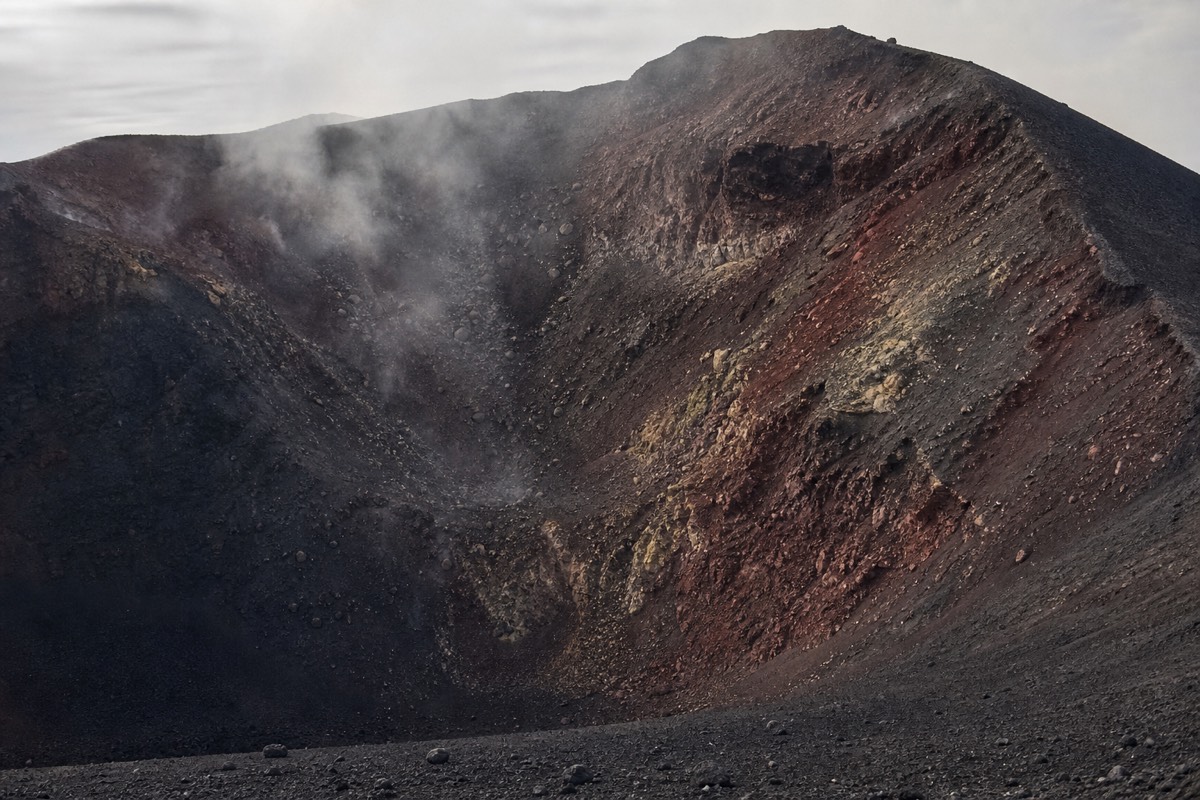
The honest version of this answer has two parts. First, the volcano's summit area is genuinely hazardous in an absolute sense: loose gravel, thin air, occasional gas, and the possibility of sudden weather. That is true on a calm week just as much as an active one, which is exactly why every summit-adjacent tour on this site runs with a certified guide rather than as a self-guided walk. Second, the specific risk from eruptive activity is one that guides are trained to read and respond to daily, because they are up there constantly and have a direct financial and safety interest in getting it right.
The impact depends on the eruption and local restrictions. Ash can disrupt towns and flights, and flank eruptions have affected settlements historically. Tour routes may be reduced or cancelled; neither lower altitude nor a booking guarantees access. Follow official instructions for the day.
Will Mount Etna erupt in 2026?
Almost certainly, in the loose sense of producing some observable activity, since that has been Etna's pattern for centuries. Nobody, including INGV, can name an exact date for a specific eruption in advance. What volcanologists can and do track is short-term precursors, days to weeks out, not a full-year forecast.
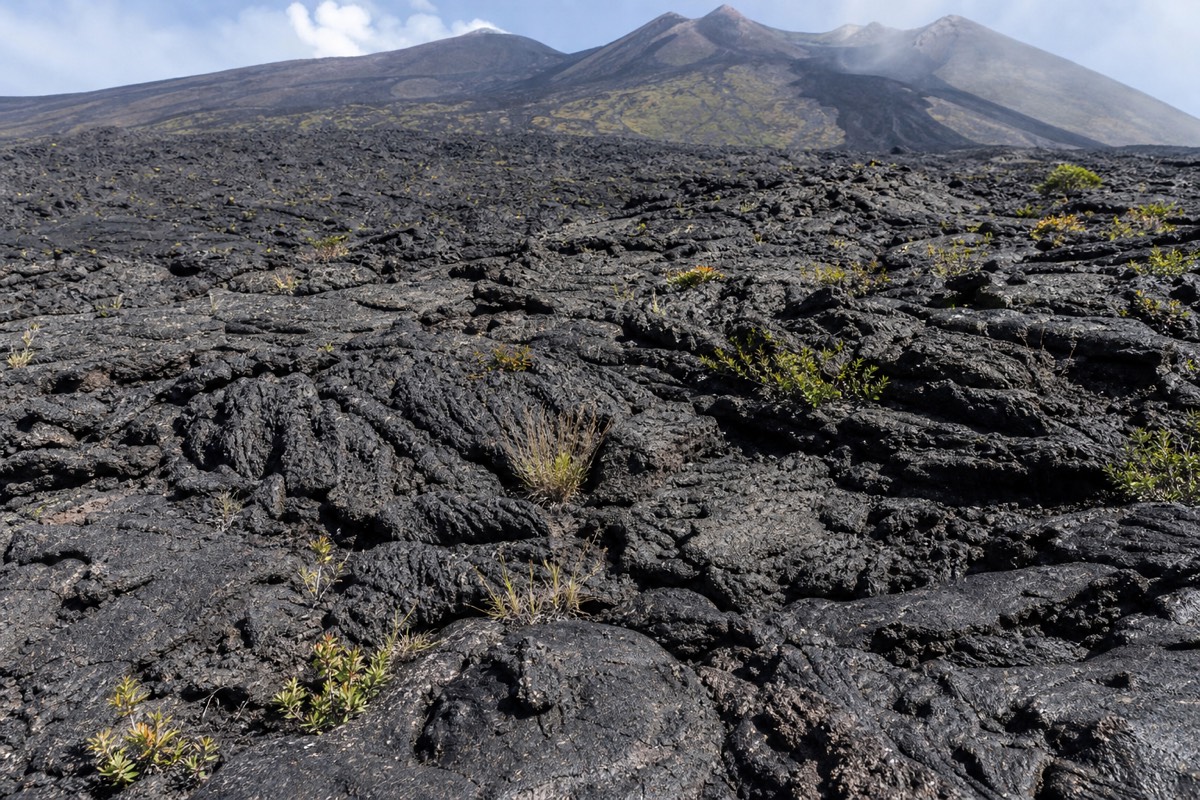
This is a fair question to ask and a genuinely honest answer disappoints people looking for certainty. Volcano forecasting works on short horizons: seismic swarms, ground deformation, and gas readings can flag that something is likely within days, but nobody publishes a reliable "Etna will erupt on this date" prediction months ahead, on Etna or any other volcano. Anyone claiming otherwise is guessing.
What is fair to say is that, based on Etna's documented behavior, some form of visible activity within 2026 is likely simply because that has been true almost every year for a long time. That is different from predicting a major, disruptive event. If you are booking months in advance, the more useful question is not "will it erupt" but "what happens to my booking if conditions change on the day," and the honest answer is that reputable operators reroute or offer a refund rather than send a group into a closed area.
How does INGV actually monitor what Etna is doing?
Through a permanent network of seismic sensors, thermal cameras, gas-monitoring stations, and ground-deformation instruments spread across the volcano, feeding continuous data back to the observatory in Catania. This is one of the most densely monitored volcanoes on Earth, which is part of why guides trust the bulletins enough to build a work day around them.
Etna sits inside a layered monitoring system rather than relying on any single instrument. Seismic stations pick up the small tremors that often precede a change in activity. Thermal cameras watch the summit craters around the clock, spotting incandescence long before it would be visible to the naked eye in daylight. Gas sensors track shifts in sulfur dioxide output, one of the more reliable early indicators that magma is moving closer to the surface. None of this is exotic technology reserved for Etna specifically, but the density of coverage here, built up over decades of study, is unusually thorough for an active volcano this close to a metropolitan area.
The output of all that instrumentation is public. INGV posts regular bulletins on current activity, and operators check them the way a ski resort checks an avalanche forecast: as a working input to the day's plan, not as background reading. If you want the primary source rather than a secondhand summary, the Osservatorio Etneo site is where the actual reports live.
What happens to your tour when there's a volcanic alert?
The route gets shortened or rerouted at a lower altitude; it does not typically get scrapped entirely. Every tour that reaches the upper mountain has a built-in fallback plan for exactly this scenario, because it comes up often enough to be routine operational planning rather than an edge case.
The table below lays out, tour by tour, what "normal" looks like against what an elevated-activity day tends to look like for the three most altitude-dependent experiences.
| Tour | Normal operation | Adjustment during elevated activity |
|---|---|---|
| Guided summit trek | Guide chooses between a 3,000m moderate route or the 3,400m approach to the Central Craters | Caps at the 3,000m route; the summit crater system is still visible from there, just not approached as closely |
| Cable car and 4x4 jeep tour | Cable car to 2,500m, then 4x4 bus to roughly 2,900m for a guided walk near the Central Craters | Winter operations depend on snow, wind and access restrictions. The operator may change the route or transport, or suspend service; a snowcat substitute is not guaranteed. Confirm the operation on your travel date. |
| Hidden Trails trekking tour | Full-day trek past the Silvestri Craters into the Valle del Bove, reaching 2,400m, including a lava-flow cave | The cave portion can close on short notice if seismic activity picks up; the guide switches to an alternate section of the trail |
Operators build these fallbacks in because the alternative, cancelling every time the mountain does what mountains like this do, would mean cancelling constantly. Guides make the call the morning of departure using the latest INGV reading, weather, and their own visual check of the summit, which is a more current and specific source than anything a search engine surfaces from a year-old article.
Etna's eruption pattern, in plain terms
Etna has a long, well-documented history of frequent minor and moderate activity, punctuated occasionally by larger episodes, going back centuries. Its combination of persistent activity and proximity to a populated area is why it is classified as one of the world's Decade Volcanoes for scientific study, per the volcano's own background page on Wikipedia.
What makes Etna unusual is not that it erupts, plenty of volcanoes do, but how often it does something observable without that translating into the kind of catastrophic event that reshapes a region. Most years bring a mix of degassing, strombolian bursts, and shorter fountaining episodes. Larger flank eruptions, the ones that send lava toward inhabited slopes, happen far less frequently and get tracked closely enough that towns below have had time to plan and, in past events, to redirect flows away from populated areas using engineered barriers.
None of this is a reason to treat a booking decision as a coin flip. It is a reason to trust the current bulletin over a memory of a headline from a different year. If you are weighing a real "what if," the scenario worth reading through in full is covered separately: what would happen if Mount Etna erupted walks through what an escalation would actually mean for nearby towns and for a booked tour.
How do you actually check Etna's status before your trip?
Three sources cover almost everything: INGV's public bulletins for the technical picture, your tour operator's own confirmation message closer to the date, and the guide's own briefing on the morning of the tour, which reflects conditions from the last few hours rather than the last few weeks.
| Source | What it tells you | Best used for |
|---|---|---|
| INGV Osservatorio Etneo | Technical bulletins on current seismicity, gas output, and visible activity | Checking the general situation weeks or days before departure |
| Your operator's pre-trip message | Whether the booked route is running as planned or has a known adjustment | The 24 to 48 hours before your tour |
| The guide's morning briefing | The most current read, including any change made overnight | The day itself, right before departure |
Skip the temptation to judge current conditions from a news article, a forum post, or a video that could be from any year. Etna generates coverage every time it does something photogenic, and that coverage tends to stay indexed and easy to stumble across long after the specific episode has passed. A bulletin dated to the current week is worth more than a viral clip from three eruptions ago.
If your interest in current status is really about picking where to base yourself and how close to get, what's the closest city to Mount Etna covers the practical distance question, and the full lineup of routes and prices is easiest to compare on the full tour comparison.
What do INGV's alert levels actually mean?
Like many volcano observatories worldwide, INGV communicates status using a plain-language aviation color code alongside its technical bulletins, ranging from a quiet baseline through to elevated warning stages. The point of the system is to translate seismic and gas data into something operators and pilots can act on quickly, not to alarm visitors.
The color itself is less useful to a tourist than what accompanies it: a short written note on what has actually changed, whether that is a rise in tremor, a new ash emission, or simply routine degassing continuing as normal. Reading the accompanying text rather than fixating on a single color word is the more informative habit, since the same color can describe fairly different underlying situations depending on which specific signal triggered it.
Guides working the mountain daily treat these bulletins as one input among several, alongside their own visual check of the summit and direct radio contact with colleagues already on site that morning. That layered approach is part of why a route decision made at 7am can differ from what a bulletin published the previous evening implied.
How has Etna's activity affected nearby towns historically?
Etna has a long record of eruptions reaching populated areas, most famously in 1669 when lava flows reached the outskirts of Catania, and in 1928 when an eruption destroyed the town of Mascali. Modern towns like Zafferana Etnea have also faced threatened flows in more recent decades, generally managed through evacuation planning and, in some cases, engineered diversion.
| Period | What happened, in general terms |
|---|---|
| 1669 | A major flank eruption sent lava flows toward Catania, reaching the city's outskirts, one of the most significant documented events in Etna's history |
| 1928 | An eruption destroyed the town of Mascali on the volcano's eastern flank |
| Early 1990s | Lava flows threatened Zafferana Etnea; authorities used engineered barriers and diversion measures to help protect the town |
| 2000s to present | Frequent minor to moderate activity, mostly confined to the summit area, with occasional short-lived flank episodes |
The pattern across this record is informative on its own: destructive events reaching towns are rare relative to the volcano's overall activity, and when they have occurred, they have generally developed over days rather than hours, giving authorities time to respond. For the deeper look at what a genuine escalation would mean today, see what would happen if Mount Etna erupted, which is built specifically around that question, not the day-to-day activity this page covers. Full background sits on Wikipedia's Mount Etna page.
What should you do if you notice ash or unusual activity during your trip?
Follow your guide's instructions immediately, since they are trained specifically for this scenario, and treat it as the normal safety procedure it is rather than a crisis. Outside of a guided tour, move away from the immediate area, check INGV's bulletin, and follow any instructions from local authorities or your accommodation.
Ash fall away from the immediate crater area is more often an inconvenience than a hazard: it can irritate eyes and throat and is worth covering your mouth and nose for, similar to smoke. Genuinely hazardous proximity to active vents is exactly the zone guided tours are built to avoid or evacuate from quickly, which is one of the clearest practical arguments for going with a licensed operator on any route that gets close to the summit craters.
Common activity myths worth clearing up
| Myth | Reality |
|---|---|
| "Etna erupting" means the whole island is unsafe | The impact depends on the eruption and local restrictions. Ash can disrupt towns and flights, and flank eruptions have affected settlements historically. Tour routes may be reduced or cancelled; neither lower altitude nor a booking guarantees access. Follow official instructions for the day. |
| You can't visit at all if there's any activity | Standard tours run through most activity levels with adjusted routes; full closures are the exception, not the rule |
| Lava will reach Catania like it did in 1669 | Events of that scale are rare in the historical record and would develop with enough lead time for authorities to respond |
| A news article from last year tells you today's status | Only a current INGV bulletin or your operator's live update reflects the present situation |
What does an operator's pre-departure check actually involve?
Reputable operators run through the same short list every morning before a summit-adjacent tour departs, checking the current bulletin, the weather forecast, and direct word from guides already on the mountain, rather than relying on a single source or yesterday's plan.
| Check | What it confirms |
|---|---|
| Latest INGV bulletin | Any change in seismicity, gas output, or visible activity overnight |
| Weather forecast at altitude | Wind, cloud, and precipitation for the specific elevation the route reaches |
| Radio or phone check with guides on site | A live, visual confirmation of current conditions, not just instrument readings |
| Cable car and 4x4 operating status | Snow, wind or volcanic restrictions may change or cancel operations. A replacement vehicle or alternative route is at the operator’s discretion, not a guarantee that an ascent will run. |
This is the same due diligence that turns "is Etna erupting" from an abstract worry into a routine operational question, answered fresh every single morning rather than assumed from a general impression of the volcano.
For background on the mountain itself, including its summit craters and why its exact height shifts over time, see our Mount Etna facts guide.