Alcantara Gorges: What to Know
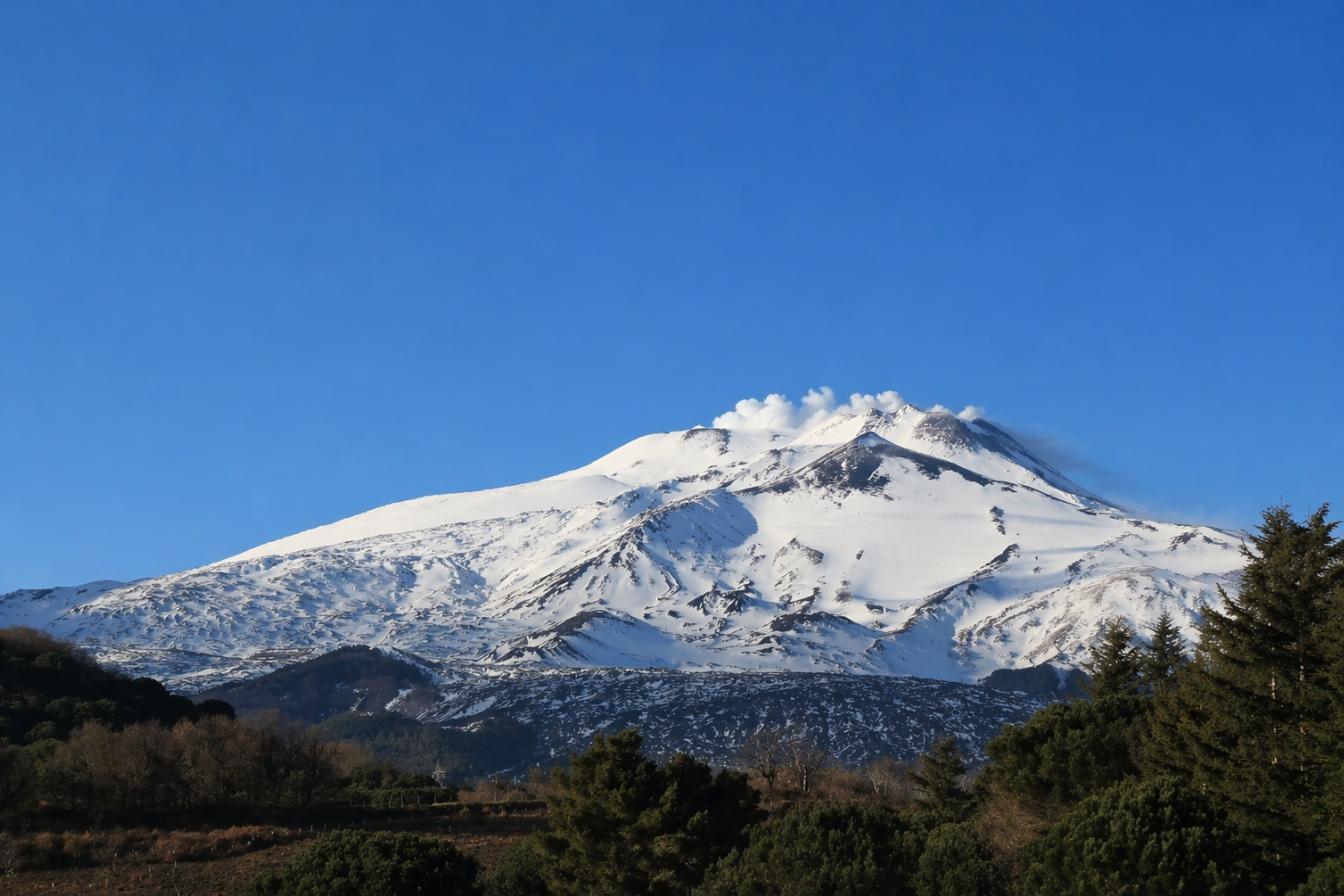
The Alcantara Gorges sit about 45 minutes north of Etna's summit craters, and they are made of the same rock. Lava did this, not a river alone.
Independent access and a combined Etna day solve different problems: decide whether you need transport and lunch as well as gorge entry.
At a glance: Choose independent gorge access or a combined Etna day. Municipal entrance does not necessarily include the lift; cold water and changing river conditions make swimming optional.
Two ways to visit the Alcantara Gorges
Based on the Etna and Alcantara Gorges Full-Day Tour's own listed inclusions and the gorges' public entrance/elevator setup.
What Are the Alcantara Gorges, Exactly?
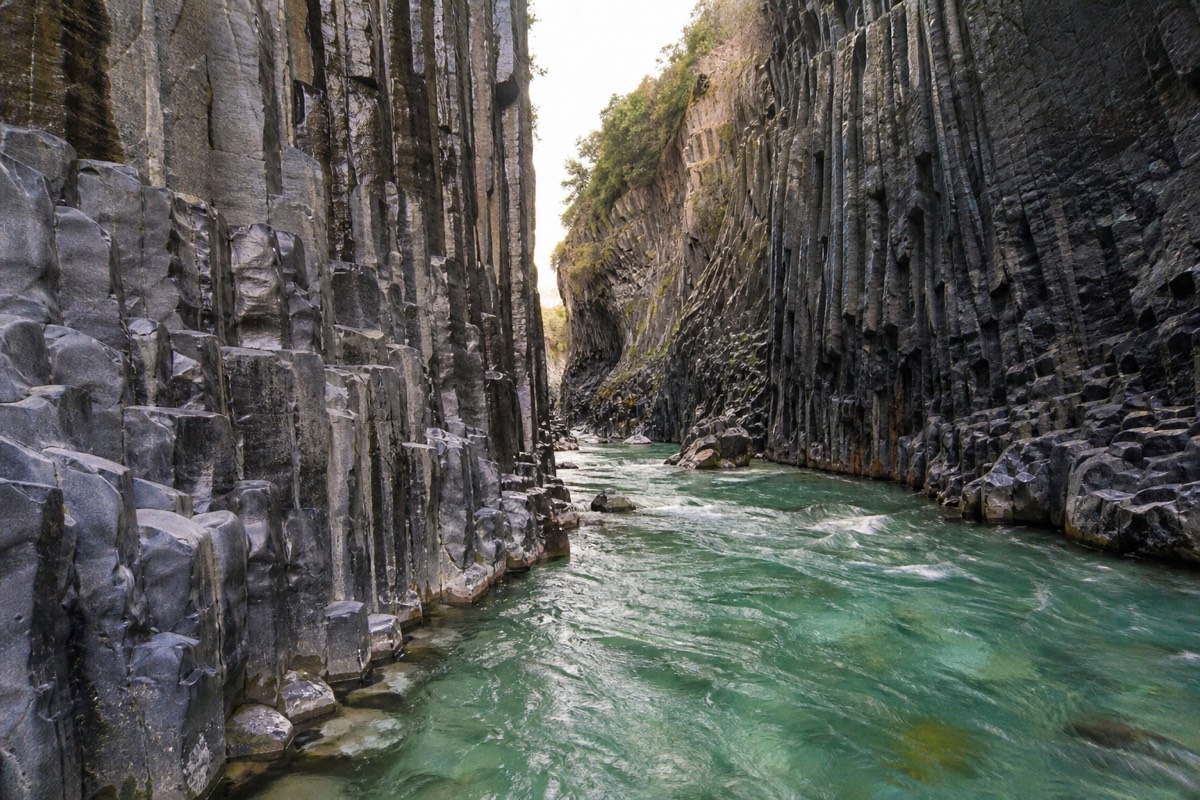
The Alcantara Gorges are a narrow basalt canyon carved where a Mount Etna lava flow met the Alcantara river and cracked into tall columns as it cooled. Walls of dark, geometric rock rise on both sides of the water, in places over 20 meters high, and the riverbed itself is smoothed volcanic stone rather than sand or gravel.
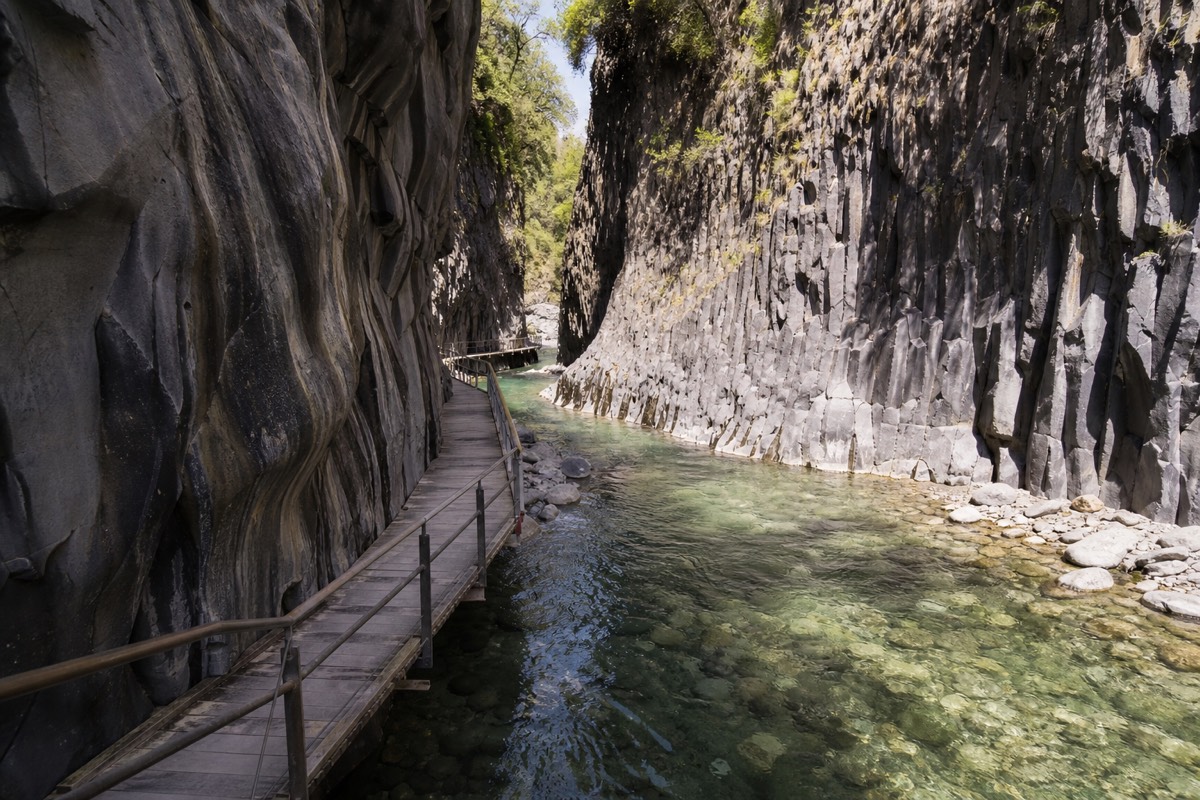
The short version of the geology: lava from Etna's northern flank pushed down into the Alcantara valley, and when a thick lava flow cools slowly and evenly, it can contract into long polygonal columns, mostly hexagonal, that stack like bundled pencils. The river then cut through the cooled rock over a long stretch of time, exposing the column faces you see today from the walkway and the water. It is the same basic process that produced Giant's Causeway in Northern Ireland and the Devil's Postpile in California, just built from Etna's own lava rather than a different volcanic system. For the fuller geological account, including how the site became a protected regional park, the Wikipedia entry on the Alcantara Gorges is a solid starting point, and it links out to the park's own research.
What makes the gorges worth the detour from an Etna itinerary is the contrast: you spend the morning on a volcano's flank, walking across lava fields and pine forest, then in the afternoon you are standing in a cold river gorge made of the same rock, just older and shaped by water instead of exposed to open air. It reframes the whole day as one continuous geological story instead of two separate stops.
| Quick facts | What we know |
|---|---|
| Rock type | Basalt, formed from a Mount Etna lava flow |
| Column shape | Mostly hexagonal, some pentagonal and irregular |
| Wall height | Varies by section, up to roughly 20+ meters in places |
| River | Alcantara river, fed by mountain runoff and Etna springs |
| Distance from Etna's craters | Roughly 45 minutes by road from the Rifugio Sapienza area |
| Protected status | Managed as a regional nature park (Parco Fluviale dell'Alcantara) |
How Do You Actually Get Down to the River?
The main public access point on the Alcantara side uses a paid elevator that carries visitors down the gorge wall to the riverbed, and that entrance and elevator fee is built into the one Etna tour that stops here. There are also natural staircases and paths at points along the river, but the elevator is the easiest and most commonly used route in.
The gorge walls are steep, and while there are stone stairs at a couple of points, most day visitors use the elevator that drops from the ticketed entrance area straight down to river level. It is fast, it avoids a slippery descent on wet rock, and it is the access point built into the Etna and Alcantara Gorges full-day tour, which lists the entrance and elevator fee as included rather than something you pay for separately once you arrive. That matters, because at busy times the ticket line and elevator queue can add up, and having it already sorted keeps a guided day moving.
If you are visiting independently rather than as part of an Etna day, you would buy entrance separately at the gate, and there is also a walking path down for anyone who prefers not to use the elevator or wants to see more of the gorge from above first. Either way, comfortable closed shoes make a real difference on the stone paths, which get wet and can be slick even away from the riverbed itself.
Guided as Part of an Etna Day, or on Your Own: Which Way Should You Visit?
Visiting as part of a guided Etna and Alcantara day trades some flexibility for logistics that are already solved: pickup, lava-front and Sartorius Crater time on the volcano, lunch, and the gorge entrance fee are bundled into one day. Visiting independently gives you more control over how long you stay at the river, but means arranging your own transport to a rural gorge with limited public transit.
| Factor | Guided Etna + Alcantara day | Independent visit |
|---|---|---|
| Transport | Pickup from Taormina or Catania included | Rental car, taxi, or limited local bus/train |
| Etna time | Ragabo pine forest, 2002 lava front, Sartorius Craters walk | Not included unless separately planned |
| Gorge entrance and elevator | Included in the tour price | Paid on-site |
| Lunch | Traditional Sicilian lunch included | Bring your own or find a local option |
| Time at the river | Set to the group's schedule | As long as you like |
| Best for | Travelers who want Etna and the gorges in one day, no logistics | Travelers focused only on the gorges, or staying nearby with a car |
For most visitors staying in Taormina or Catania on a single Sicily trip, the guided option is the more efficient path, since the Alcantara Gorges alone are a fairly short visit and pairing them with a full Etna morning gets more out of one travel day. Travelers based specifically near Randazzo or Castiglione di Sicilia, closer to the gorges themselves, have an easier case for going independently.
How Cold Is the Water, Really?
The Alcantara river runs consistently cold, generally cited around 8-10°C even in warmer months, because it is fed by mountain runoff and volcanic springs rather than warmed by the open sun. Wading is common; a full swim is a short, bracing one for most people, not a lazy afternoon float.
This surprises first-time visitors who expect a Sicilian river in summer to feel like the sea. It does not. The gorge walls shade much of the water, the source is high-altitude runoff, and the basalt riverbed does not retain heat the way sand does. Locals and repeat visitors treat it as a quick, invigorating dip rather than a swim session, and plenty of people are happy just wading to knee or waist depth and taking photos of the columns rather than fully submerging.
The basalt riverbed is also smooth in places but genuinely slippery, especially anywhere algae has built up in slower-moving water. Watch your footing, move slowly on wet rock, and keep an eye on kids near any deeper pools. None of this makes the gorges risky to visit, it just means "swimming" here is a different experience than a beach day, and worth setting expectations for before you go.
| What to expect | Reality |
|---|---|
| Water temperature | Cold year-round, roughly 8-10°C even in summer |
| Riverbed surface | Smooth basalt, slippery in spots, especially with algae |
| Typical visitor behavior | Wading and photos more common than a full swim |
| Water level | Higher and faster with spring snowmelt, calmer in late summer |
| Recommended footwear in the water | Water shoes or old trainers, not bare feet or flip-flops |
What Should You Actually Pack for the Gorges?
Pack for two different environments in one day if you're combining Etna and Alcantara: warm layers and closed shoes for the volcano, then swimwear, a towel, and water shoes for the gorge. A dry bag or plastic bag for wet items on the ride back is a small thing that makes a real difference.
| Item | Why it matters |
|---|---|
| Water shoes or old sneakers | Basalt riverbed is slippery, bare feet are uncomfortable and unsafe |
| Swimwear | For anyone planning to wade in or swim |
| Towel | Not always provided, and the water is cold enough that you'll want one immediately |
| Windbreaker or light jacket | For the Etna portion of the day, temperatures drop with altitude |
| Closed, comfortable shoes | For the lava front walk and Sartorius Craters trail earlier in the day |
| Cash or card for extras | Snacks or souvenirs at the gorge entrance area |
| Dry bag or plastic bag | Keeps wet swimwear away from the rest of your belongings afterward |
Because the day typically runs from a cold volcanic morning to a cold river afternoon, layering matters more than any single piece of gear. A fleece or windbreaker that packs down small works better than one heavy jacket you're stuck carrying once the sun is out.
What Does the Full Etna and Alcantara Day Actually Include?
The one tour on this site that visits the gorges pairs a northern-slope Etna morning, the Ragabo pine forest, the 2002 lava front, an easy trek to the Sartorius Craters, and the Grotta dei Ladroni lava tunnel, with a traditional Sicilian lunch, before the afternoon at the Alcantara Gorges. It's the only one of the six tours on this site that includes the gorges at all.
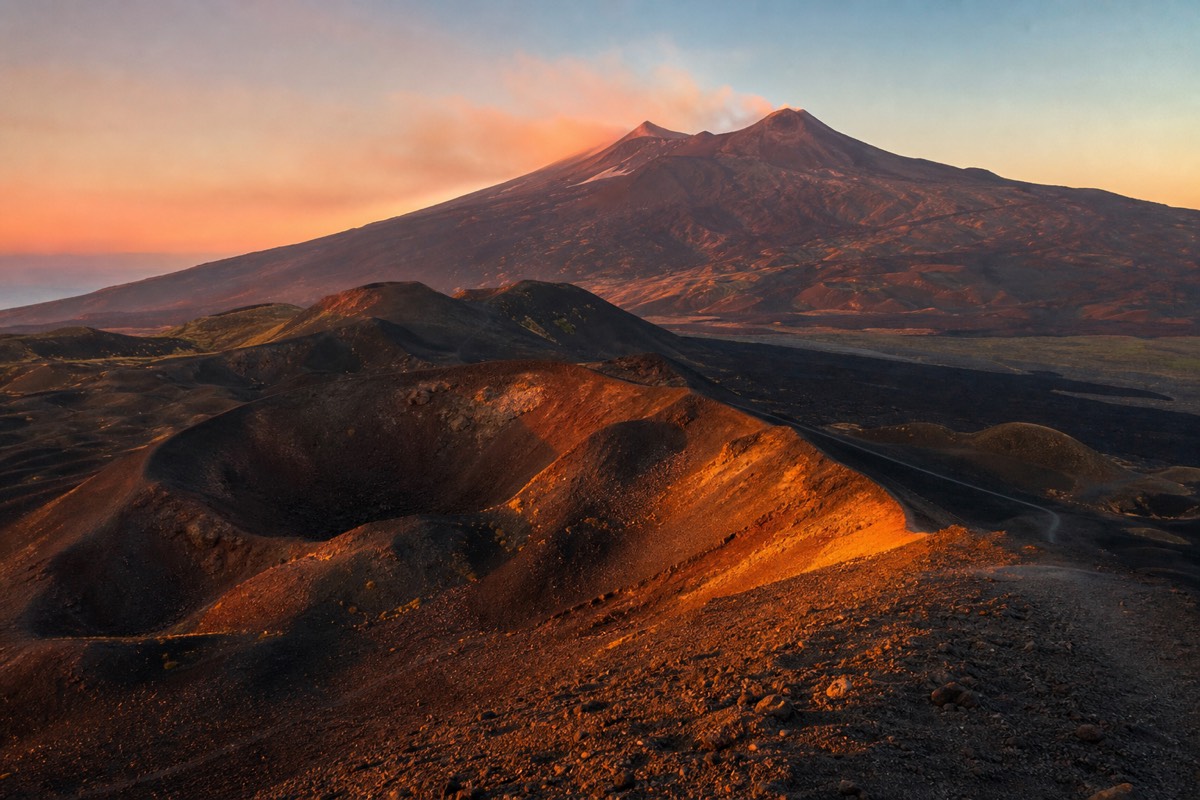
The Sicily: Etna and Alcantara Gorges full-day tour runs about 8 hours with pickup from Taormina or Catania. The Etna half of the day covers the northern slope rather than the more commonly toured south side: the Ragabo pine forest, the lava front left by the 2002 eruption, and an easy roughly 3km walk to the Sartorius Craters, a row of secondary vents formed during that same eruption. Along the way the group passes through the Grotta dei Ladroni, a lava tunnel with 18th-century carvings inside, using a provided helmet and flashlight. Lunch is a traditional first course, drink, and coffee at a local restaurant, and then the afternoon shifts to the gorges themselves, with the municipal entrance included; lift access is not guaranteed and time to walk the riverbed or swim.
Two travelers with young kids should note that strollers are not allowed on this itinerary, though babies are fine in a carrier. It's worth knowing before booking if you're traveling with a stroller-age child.
Two other tours on this site are useful to know about even though they don't stop at the gorges. The Etna Sunset Adventure trek, lava cave, and tasting experience covers the southern slope from Catania, with a farm tasting of local honey, olive oil, and Sicilian products, a lava cave, and a trek through extinct craters ending at sunset over the Valle del Bove. It's a strong choice if the gorges aren't a priority and you'd rather stay on the south side near Catania. The Mount Etna Hidden Trails trekking tour from Catania is a longer, more physical day, past the Silvestri Craters and the 2001 lava front into the Valle del Bove at 2,400m, also from the south side, and also does not include the gorges.
When's the Best Time to Visit the Gorges?
Spring brings the highest water volume from Etna's snowmelt, which makes for a more dramatic river but colder, faster water; late summer brings calmer, shallower water that's easier to wade or swim in, at the cost of the crowds a hot Sicilian August draws. Either season works, they just deliver different versions of the gorge.
| Season | Water conditions | Trade-off |
|---|---|---|
| Spring (April-May) | High volume from snowmelt, more dramatic flow | Colder water, variable weather on the Etna portion of the day |
| Early summer (June) | Still strong flow, warming air temperatures | River still cold even as the surface air warms |
| Peak summer (July-August) | Lower, calmer water, easiest for wading | Busiest crowds and hottest conditions on the Etna leg |
| Autumn (September-October) | Generally mild, quieter than summer | Water flow depends on that year's rainfall |
For a fuller month-by-month picture of Etna conditions on the volcano side of a combined day, including snow, temperature swings, and crater access, see the site's dedicated Mount Etna weather and best time to visit guide.
How Long Should You Actually Plan to Spend at the Gorges?
Most visitors spend somewhere between 45 minutes and two hours at the Alcantara Gorges themselves, whether wading, swimming, or just walking the riverbed and photographing the basalt walls. On the guided Etna and Alcantara day, the gorges are the afternoon stop after a full volcanic morning, so the time built in is closer to that lower end.
The site itself isn't large, a stretch of accessible riverbed rather than a sprawling park you need a full day to see. What stretches a visit isn't the walking distance, it's how long people want to stay in or near the water once they're down there. Families with kids wading in the shallows, or photographers waiting for good light on the basalt columns, often linger longer than someone who came mainly to see the geology and move on. If you're visiting independently with your own car and no other stops planned that day, budgeting two to three hours including the descent, the walk, and time at the water gives a comfortable margin without rushing.
| Visit style | Typical time at the gorges |
|---|---|
| Guided Etna and Alcantara day (afternoon stop) | Roughly 45-90 minutes, set by the group schedule |
| Independent visit, quick look | 45 minutes to 1 hour |
| Independent visit, swimming and relaxing | 2-3 hours |
| Independent visit, photography-focused | 1.5-2 hours, timed for good light |
Are the Alcantara Gorges Safe to Visit?
Yes, for the vast majority of visitors who stick to the maintained access points and use common sense around wet basalt, the gorges are a safe, well-established tourist site rather than a wilderness scramble. The two real risks are footing on slippery rock and underestimating how cold and fast the water can run after heavy rain or snowmelt.
The managed entrance, elevator, and marked paths exist specifically to make an otherwise steep, slippery canyon accessible to ordinary visitors, not just experienced hikers. That said, basalt is genuinely slick when wet, more so than a typical riverbed, so falls and scraped shins are the most common minor injury, not anything more serious. Water flow and depth can change meaningfully depending on recent rainfall and snowmelt on Etna, since the river's source is directly tied to the volcano's winter snowpack; on days with unusually high flow, staff at the site may limit access to certain sections. None of this is unusual for a river gorge, it's just worth knowing before you assume it's a still, calm pool the way some photos make it look.
Etna's own volcanic activity has no direct bearing on a visit to the gorges themselves, since they sit a meaningful distance from the active craters. For the separate question of whether current activity affects visiting Etna's summit area, see the site's dedicated guide to Etna's volcanic activity, which the INGV Osservatorio Etneo, Italy's volcano observatory for Etna, monitors and reports on directly.
How Do the Alcantara Gorges Compare to Other Basalt Column Sites?
The Alcantara Gorges are smaller and more river-focused than the world's most famous basalt column formations, but they're formed by the same cooling process and are a genuine example of it, not a lesser imitation. What makes Alcantara distinct is that you're walking through the canyon and standing in the water, rather than viewing the columns from a distance.
| Site | Location | Formation |
|---|---|---|
| Alcantara Gorges | Sicily, Italy | Etna lava flow meeting the Alcantara river, columns exposed by river erosion |
| Giant's Causeway | Northern Ireland | Ancient lava flow cooling and cracking along the coast |
| Devil's Postpile | California, USA | Lava flow trapped in a valley, later carved by a glacier |
| Fingal's Cave | Scotland | Basalt lava flow, sea-carved into a coastal cave |
What sets Alcantara apart from that list isn't scale, it's access. At Giant's Causeway or Fingal's Cave you're generally viewing the columns from paths or by boat. At Alcantara, the standard visit puts you directly on the riverbed between the walls, close enough to touch the rock face and, if you choose, swim in the same water that continues to shape it. For a volcano-focused itinerary, that hands-on quality is part of why the gorges pair so naturally with an Etna day rather than standing alone as a separate attraction.
What's Nearby If You Want to Extend the Day?
The gorges sit in Etna's wine country, and the tour's morning route on the northern slope runs close to the villages at the heart of Etna DOC wine production. Neither the gorges tour nor any other tour on this site includes a wine tasting, but the geography overlaps closely.
Dedicated wine experiences are available: the two-winery day from Catania includes seven tastings and lunch; the Etna-and-wine day includes a cellar visit. From Taormina, the Etna, wine and Alcantara itinerary includes a wine-paired lunch. Honey and olive-oil sampling on the sunset tour is a different experience.
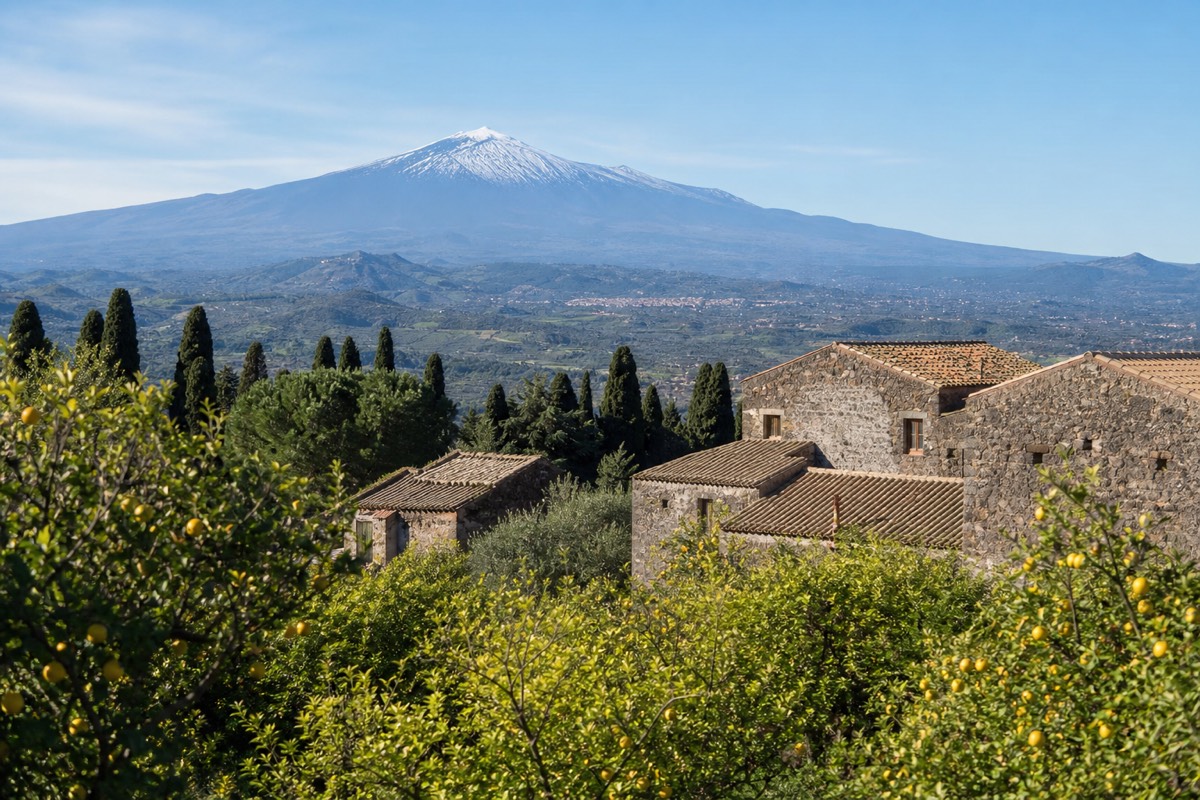
Because the gorges sit closer to Taormina than to Catania in terms of travel time on the northern route, they're also a natural fit for travelers based on that side of the island. The site's best day trips from Taormina guide covers how the gorges and Etna's north side fit into a Taormina-based itinerary, including which tours actually offer pickup from there. And if you're still deciding between the six tours on this site more broadly, the full tour comparison guide lays every option side by side. On a clear day you can even see Mount Etna from Taormina itself, well before you set foot on the gorges' basalt columns.