Mount Etna Cable Car: Prices, Hours, How It Works (2026)
The cable car is the single fastest way up Etna's south side, and also the step in the day most people get wrong by assuming a ticket alone gets them to the craters.
A city view or the lower craters may be enough. If you want to go further, compare the actual route, starting point and included transport before choosing a paid outing.
At a glance: The combined ticket includes cable car and 4x4; guide-only trekking products can charge for lifts separately. Timings, transfer options and operations depend on the chosen date.
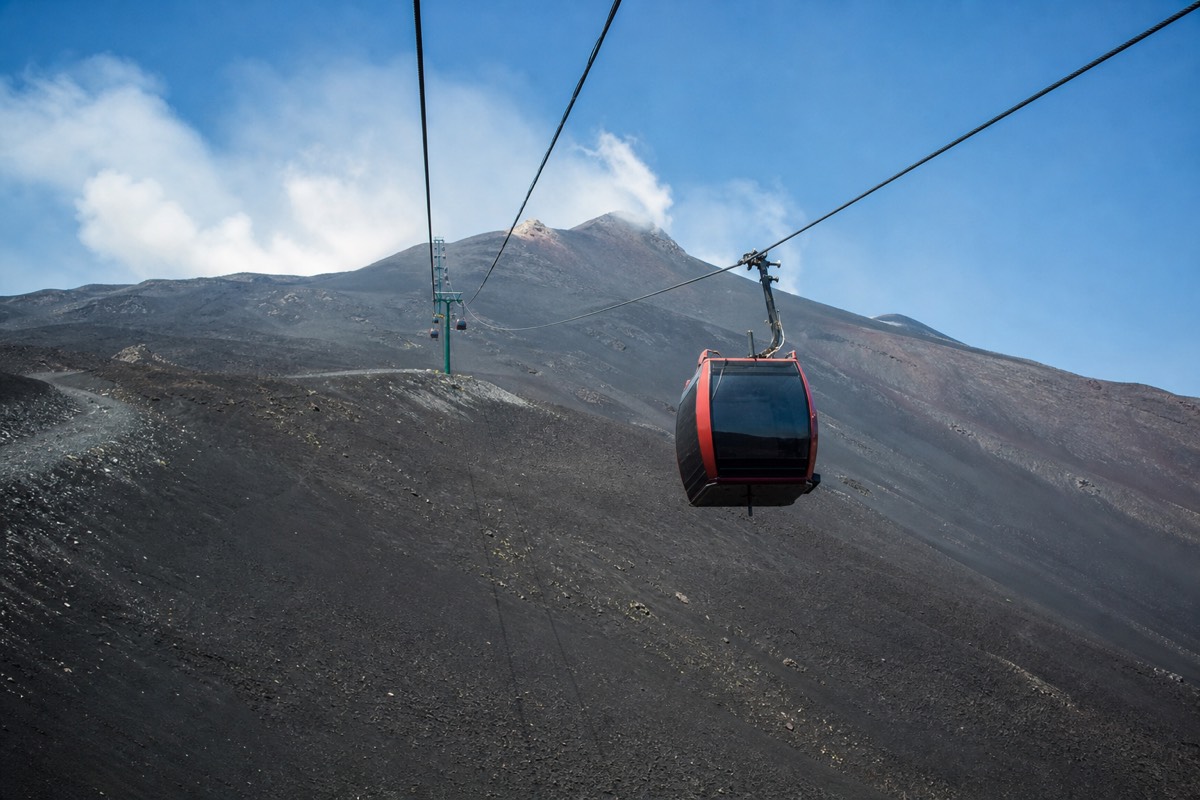
The cable car ascent, stage by stage
Altitudes and prices are the operators' own published figures (funiviaetna.com and the site's own GetYourGuide listings); confirm the current fare before booking.
What is the Mount Etna cable car and where does it run?
The Funivia dell'Etna is the official cable car on Etna's south side, carrying passengers from Rifugio Sapienza at around 1,900m up to La Montagnola station at roughly 2,500m in about fifteen minutes. It replaces what would otherwise be a multi-hour climb over loose volcanic ground.
Rifugio Sapienza itself sits at the end of the access road from Nicolosi, and it functions as the staging area for the whole south-side experience: parking, a cluster of shops selling volcanic-rock souvenirs, and the cable car's lower station. From there the gondola climbs steeply over old lava flows, giving a clear look at the terrain the mountain has produced in past eruptions before it deposits you at La Montagnola, a viewpoint and secondary staging area roughly 600 vertical meters higher.
What the cable car does not do, on its own, is get you to the actively studied Central Craters area. That final stretch, from La Montagnola up toward roughly 2,900m, is handled separately by 4x4 vehicles, covered below. Treating the cable car as "the summit ticket" is the most common misunderstanding people have before visiting, and it is worth clearing up before you book anything.
How much does the Mount Etna cable car actually cost?
Compare the current quote for your date and option, adding any excluded lifts, transport or meals. Compare the current quote for your date and option, adding any excluded lifts, transport or meals. Both figures come from the operator's own current listing; check funiviaetna.com or the live GetYourGuide listing for the exact number on your travel dates, since operator prices do shift.
| Ticket type | What's included | Approximate price |
|---|---|---|
| Cable car only, round trip | Rifugio Sapienza (1,900m) to La Montagnola (2,500m) and back | Around date-specific quote per adult |
| Cable car + 4x4 + guide | Cable car, 4x4 bus extension to roughly 2,900m, and a guided walk near the Central Craters | Around date-specific quote per adult |
| Resident discount | A reduced rate for Sicilian residents, purchased in person with ID | Available at the ticket office only, not through online booking |
Compare the current quote for your date and option, adding any excluded lifts, transport or meals. If you are trying to work out whether that gap is worth paying, is the Mount Etna cable car worth it breaks the trade-off down directly.
It's worth budgeting for the possibility of paying on-site rather than online, since some guided tours quote the trekking fee separately from the cable car and 4x4 charge. Bring a mix of cash and card: card machines are generally available at the main ticket counter, but a backup in cash avoids any awkwardness if a terminal is down on a busy day.
What are the cable car's operating hours?
The Funivia typically runs from morning until mid-afternoon, with the first cars departing around 9:00am, though exact hours shift by season and weather. Arriving at opening gives the clearest visibility of the day, before afternoon cloud tends to build over the summit.
Because hours change with daylight and season, and because weather at 2,500m can shut the system down on short notice regardless of the posted schedule, the only reliable current hours are the ones listed on the official Funivia dell'Etna site for your travel date. Booking a morning slot is worth doing regardless of the exact closing time, since visibility and crowd levels both favor an early start.
How does the 4x4 extension past the cable car work?
At La Montagnola, passengers who bought the combined ticket transfer into purpose-built 4x4 buses that climb the final stretch of rough volcanic track to roughly 2,900m. From there, a certified guide leads a walk of about twenty to thirty minutes near the Central Craters, the closest most visitors get to the active summit system.
This last stage is where a licensed guide becomes mandatory rather than optional. The terrain above La Montagnola is loose gravel over a landscape shaped by repeated eruptions, and the walking route is set day by day based on current volcanic activity, not fixed on a map. Guides working this stretch do it routinely enough to read the ground and the weather in ways a first-time visitor simply cannot, which is part of what the guided fee is paying for.
Two of the six tours on this site build directly around this ascent sequence: the cable car and 4x4 jeep tour, which is built entirely around this route with a skip-the-line voucher included, and the guided summit trek, which uses the same cable car and 4x4 sequence as the access route for hikers continuing on to the 3,400m Central Craters approach on foot.
What happens to the cable car in bad weather or snow?
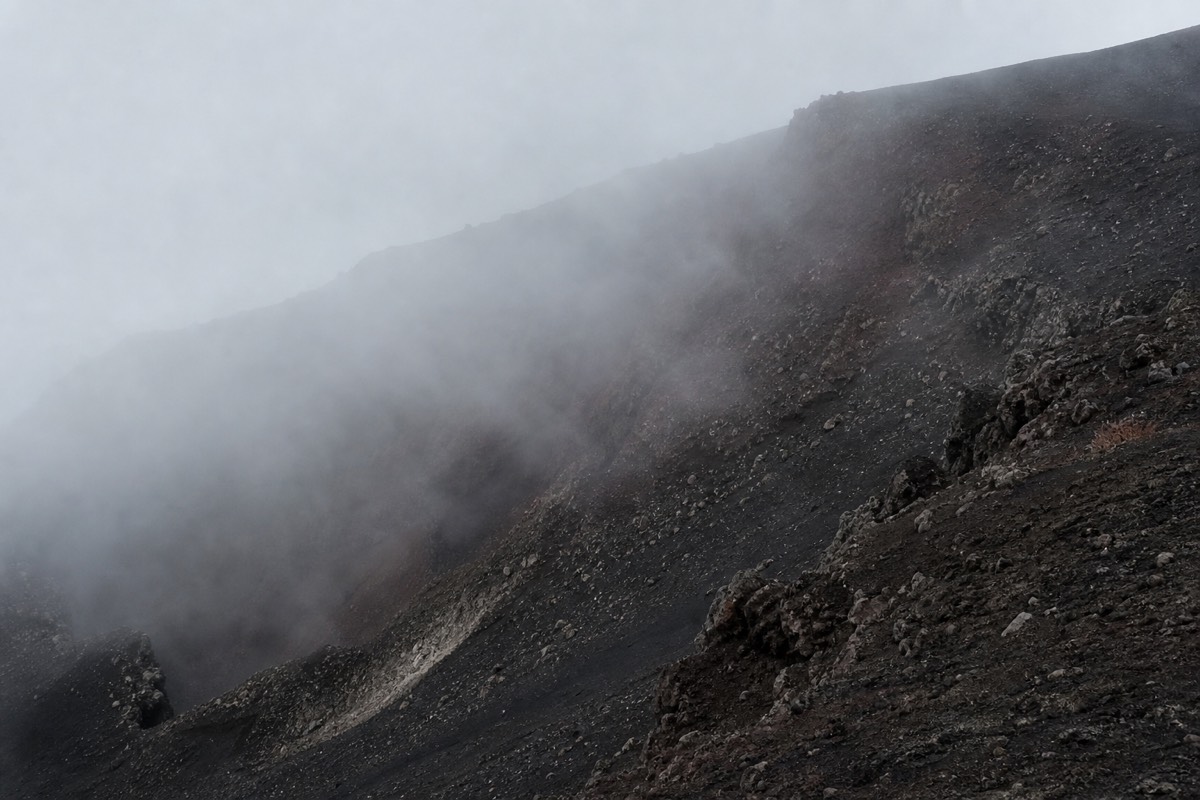
Snow, wind or volcanic restrictions may change or cancel operations. A replacement vehicle or alternative route is at the operator’s discretion, not a guarantee that an ascent will run.
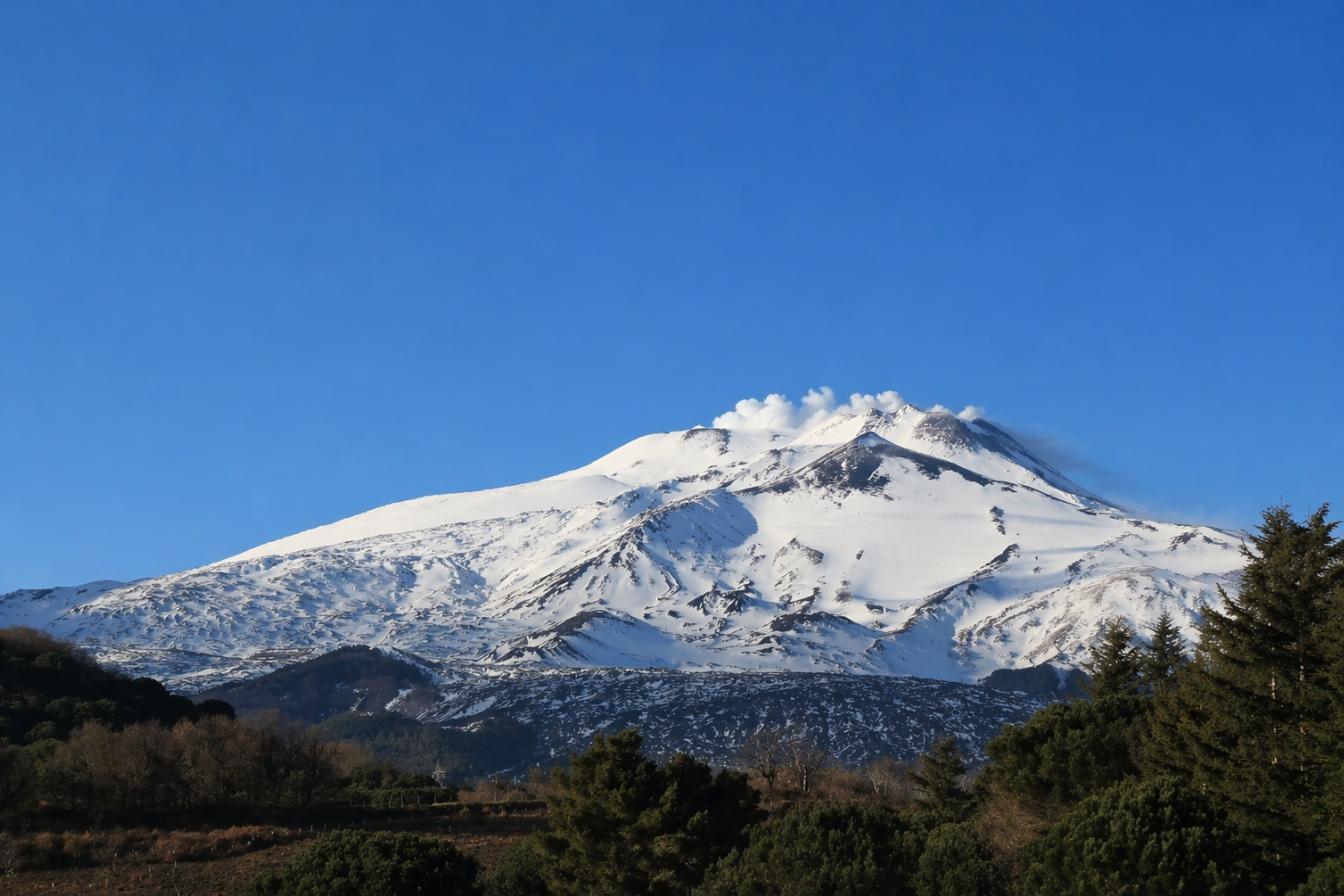
Snow, wind or volcanic restrictions may change or cancel operations. A replacement vehicle or alternative route is at the operator’s discretion, not a guarantee that an ascent will run.
Dress for this regardless of the season you are visiting in. Temperatures at 2,500m to 2,900m run consistently 15 to 20 degrees colder than Catania at sea level, with wind chill on top of that. A windbreaker and a warm layer belong in your bag even in July.
Should you buy the cable car ticket alone, or book a guided tour?
For most visitors, a guided tour that already includes the cable car and 4x4 sequence is the simpler and often better-value choice, since it removes the need to coordinate transport, timing, and ticket purchase separately, and it comes with the guide required for the upper walking area anyway.
| Approach | What you handle yourself | Best for |
|---|---|---|
| Self-drive plus cable car ticket only | Transport to Rifugio Sapienza, parking, ticket queue, and your own pacing | Independent travelers comfortable handling on-site logistics and Italian-language signage themselves |
| Cable car + 4x4 guided tour | Nothing beyond arriving on time; hotel pickup and skip-the-line access included | First-time visitors who want the summit-area walk without managing logistics |
| Guided summit trek | Physical trekking beyond the 4x4 drop-off, on foot to 3,000m or 3,400m | Fitter travelers who want to go higher than the standard guided walk reaches |
| Quad tour from Nicolosi | Driving a quad bike yourself on a 20km off-road circuit at a lower elevation | Visitors who want an active, driving-focused alternative rather than the cable car route |
For a full side-by-side of pricing across all six tours on the mountain, not just the cable car-based ones, see how much a Mount Etna tour costs.
What's the reality of the queue and skip-the-line tickets?
Skip-the-line status gets you past the general ticket queue at the counter, not past every line on the mountain. On busy days, the physical queue to board the cable car cars themselves can still run long even with a voucher already in hand, so building in buffer time still matters.
The practical routine most operators use: guests present a digital voucher at a dedicated ticket office, separate from the general public window, and exchange it for a physical boarding ticket. That step alone saves meaningful time on a summer weekend when the general line can stretch well past the building. Boarding the actual cable car cars is a separate queue that everyone shares, skip-the-line or not, since car capacity is fixed regardless of ticket type.
Arriving with the group at the agreed time, rather than wandering off to the shops at Rifugio Sapienza first, is the single biggest factor in how smoothly this part of the day goes.
What's actually at Rifugio Sapienza and La Montagnola?
Rifugio Sapienza, the lower station at 1,900m, is a small hub of shops, cafes, and the parking area for anyone arriving independently. La Montagnola, the upper station at 2,500m, is a more exposed viewpoint and transfer point where passengers switch from the cable car to the 4x4 buses for the final ascent.
| Station | Elevation | What's there |
|---|---|---|
| Rifugio Sapienza | Around 1,900m | Parking, souvenir shops, cafes, the lower cable car station, and the trailhead for the Silvestri Craters walk nearby |
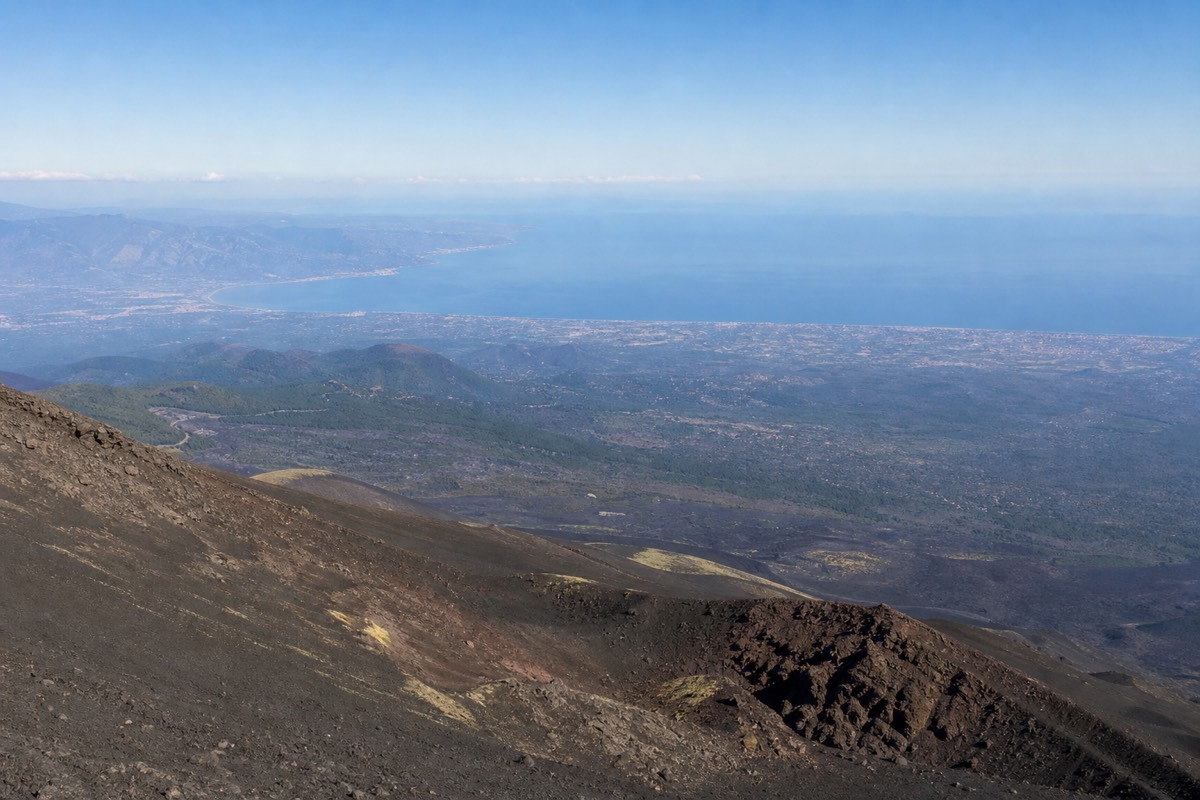
| La Montagnola | Around 2,500m | Upper cable car station, 4x4 transfer point, viewpoints over the Valle del Bove and the Ionian coast |
| Central Craters walking area | Around 2,900m | The guided walking zone near the active summit craters, reached only via the 4x4 extension |
Rifugio Sapienza is worth a few extra minutes even if you are on a tight schedule; it is the last point with reliable shops and restrooms before the mountain gets considerably starker. La Montagnola, by contrast, has minimal facilities and is fully exposed to wind, which is part of why the layering advice for this stage of the day matters as much as it does.
How does buying a ticket actually work, step by step?
Online booking through the operator's own site or a platform like GetYourGuide reserves your slot and, on combined tickets, your guide; on arrival you exchange that booking for a physical ticket at the designated window, rather than walking straight onto the cable car.
| Step | What happens |
|---|---|
| 1. Book | Reserve online in advance, ideally choosing a morning slot; walk-up tickets are available but not guaranteed in peak season |
| 2. Arrive and check in | Present your voucher at the correct window (a dedicated one for guided/skip-the-line tickets, the general counter for cable-car-only purchases) |
| 3. Collect physical ticket | Exchange your digital confirmation for a boarding pass |
| 4. Board the cable car | Queue for the gondola itself; this queue applies to all ticket types |
| 5. Transfer at La Montagnola | Combined-ticket holders continue to the 4x4 buses; cable-car-only guests explore the upper station area and descend when ready |
Are there health or mobility considerations to know about?
The upper-mountain walk near the Central Craters is not recommended for people with back, heart, or high blood pressure conditions, given the altitude and terrain involved. The cable car itself is a straightforward, seated ride suitable for most visitors.
Altitude above 2,500m can genuinely affect people with certain cardiovascular conditions, and operators flag this directly rather than leaving it to guesswork. If you have a relevant health concern, the cable car ride to La Montagnola and back, without continuing on the 4x4 extension, is a reasonable way to see a meaningful part of the mountain without pushing into the higher, more physically demanding zone. Mention any concerns to your operator when booking so the guide knows in advance.
How does the cable car compare to other ways up the mountain?
The cable car is the fastest, least physically demanding way to gain serious altitude on Etna's south side. Hiking covers the same ground more slowly and on foot; the quad tour offers a different kind of ascent entirely, on a lower-elevation off-road circuit rather than toward the summit craters.
| Method | Elevation reached | Physical demand | Best for |
|---|---|---|---|
| Cable car + 4x4 | Up to around 2,900m | Low; mostly seated transport with a short guided walk | Visitors who want the summit-area view without a serious hike |
| Hiking from Rifugio Sapienza | Up to 3,000m or 3,400m on the summit trek | High; sustained walking on loose gravel at altitude | Fit travelers who want to earn the ascent on foot |
| Quad tour from Nicolosi | Around 2,000m, on a 20km circuit | Moderate; active driving rather than walking | Visitors who want an adrenaline-focused alternative to the cable car route |
How does the queue change by season?
Peak summer weekends bring the longest queues at both the ticket counter and the cable car boarding gate; shoulder-season mornings and winter weekdays are consistently quieter, with skip-the-line tickets making the biggest difference precisely when crowds are heaviest.
| Period | Typical queue level | Where skip-the-line helps most |
|---|---|---|
| July-August, midday | Longest of the year | Ticket counter queue especially, since the general line often runs long |
| May-June, September-October | Moderate, shorter in the early morning | Modest benefit; mornings are manageable even without it |
| December-February, weekdays | Shortest, weather permitting | Minimal benefit needed, though bad-weather days can still bring last-minute crowding when the cable car reopens after a closure |
Booking the earliest slot you can manage remains the single most reliable way to avoid both crowds and afternoon cloud, regardless of which season you are visiting in. For a season-by-season look at conditions beyond just crowd levels, see Mount Etna weather and best time to visit.
What does a typical cable car day actually look like, hour by hour?
A guided cable car and 4x4 day generally runs a half-day format: morning hotel pickup, an hour or so of transfer to Rifugio Sapienza, the cable car and 4x4 ascent sequence, a guided walk near the Central Craters, and a return that puts most visitors back at their hotel by early to mid-afternoon.
| Approximate time | What's happening |
|---|---|
| Early morning | Hotel pickup from Catania or Taormina, or independent arrival at Rifugio Sapienza |
| Mid-morning | Ticket exchange, cable car ascent to La Montagnola (around 15 minutes) |
| Late morning | 4x4 transfer to roughly 2,900m, guided walk near the Central Craters (around 20-30 minutes) |
| Midday | Descent via 4x4 and cable car back to Rifugio Sapienza |
| Early afternoon | Return transfer to Catania or Taormina |
This structure leaves the rest of the day genuinely free, which is one reason the cable car and 4x4 combination pairs well with an afternoon in Taormina or a second, lower-key activity if you're not ready to call it a day. Anyone weighing this route specifically against the alternative of skipping it altogether should read is the Mount Etna cable car worth it for the direct trade-off.
What's included versus what you pay for separately?
Guided tours built around the cable car typically bundle transport, the guide fee, and safety equipment into the booking price, while the cable car and 4x4 tickets themselves are sometimes paid on-site rather than pre-included, depending on which specific tour you book.
| Tour | Cable car / 4x4 cost | What else is included |
|---|---|---|
| Cable car and 4x4 jeep tour | Built into the ~date-specific quote booking price | Skip-the-line voucher, guided walk near the Central Craters |
| Guided summit trek | Paid on-site, around date-specific quote to date-specific quote depending on the route chosen | Certified guide, helmet, safety insurance, optional hotel pickup |
This distinction catches people out more than almost anything else about the cable car: assuming a booking price covers everything on the mountain when, on some tours, the cable car fee is a separate on-site cost. Always check the specific listing's inclusions before assuming either way, and bring cash or a card regardless, since on-site payment is common practice here.
What if you'd rather skip the cable car entirely?
The cable car is the fastest route up Etna's south side, but it isn't the only way to experience the mountain. Visitors put off by mechanized ascents, cost, or simply wanting a different pace have real alternatives, from lower-elevation trekking to an off-road quad circuit that never touches the Funivia at all.
The quad tour from Nicolosi is the clearest example: it stays around 2,000m, well below the cable car's reach, and trades the summit crater view for an active, driving-focused circuit through lava channels and broom forest. For visitors chasing altitude without the cable car specifically, the summit trek's foot-access option exists too, though in practice most guided summit routes still use the cable car and 4x4 as the standard access method simply because it is faster and leaves more energy for the walk near the craters themselves. Independent hiking above Rifugio Sapienza without any mechanized assistance is possible for very fit, well-prepared visitors, though it adds hours to the day; see visiting Mount Etna independently for what that actually involves. For background on exactly how high the cable car and the mountain itself actually reach, see our Mount Etna facts guide.