Visiting Mount Etna Independently: What You Need to Know
Rifugio Sapienza sits at around 1,900 metres on Etna's south side, and you can drive there, park, and ride the cable car without booking a tour. What you cannot do on your own is walk into the summit crater zone: past a certain point the mountain hands that ground to certified guides.
A city view or the lower craters may be enough. If you want to go further, compare the actual route, starting point and included transport before choosing a paid outing.
At a glance: You can plan an independent lower-mountain visit. For higher access, compare the current restrictions, ride ticket and guided-route options; add the cost of getting to Etna South.
What you can and can't do without a guide
Based on the tours' own published safety requirements (a certified guide is listed for the summit-area walk on multiple GetYourGuide listings); confirm current access rules directly with funiviaetna.com or your chosen operator.
Can you visit Mount Etna without booking a tour?
Yes, for the base of the mountain. You can drive to Rifugio Sapienza at around 1,900 metres, park, buy a cable car ticket on the spot, and ride up without ever booking a tour. Independent access runs out once a route heads toward the active summit craters, where a certified guide stands between you and the crater rim.
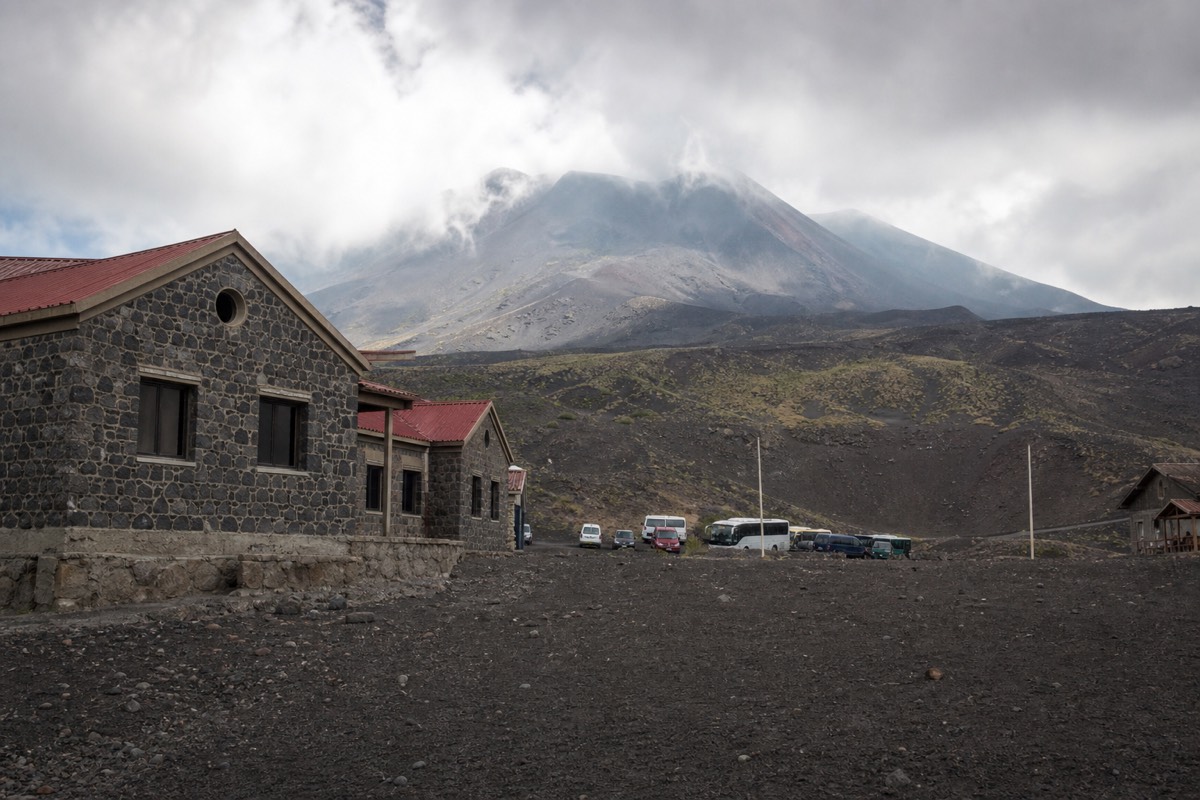
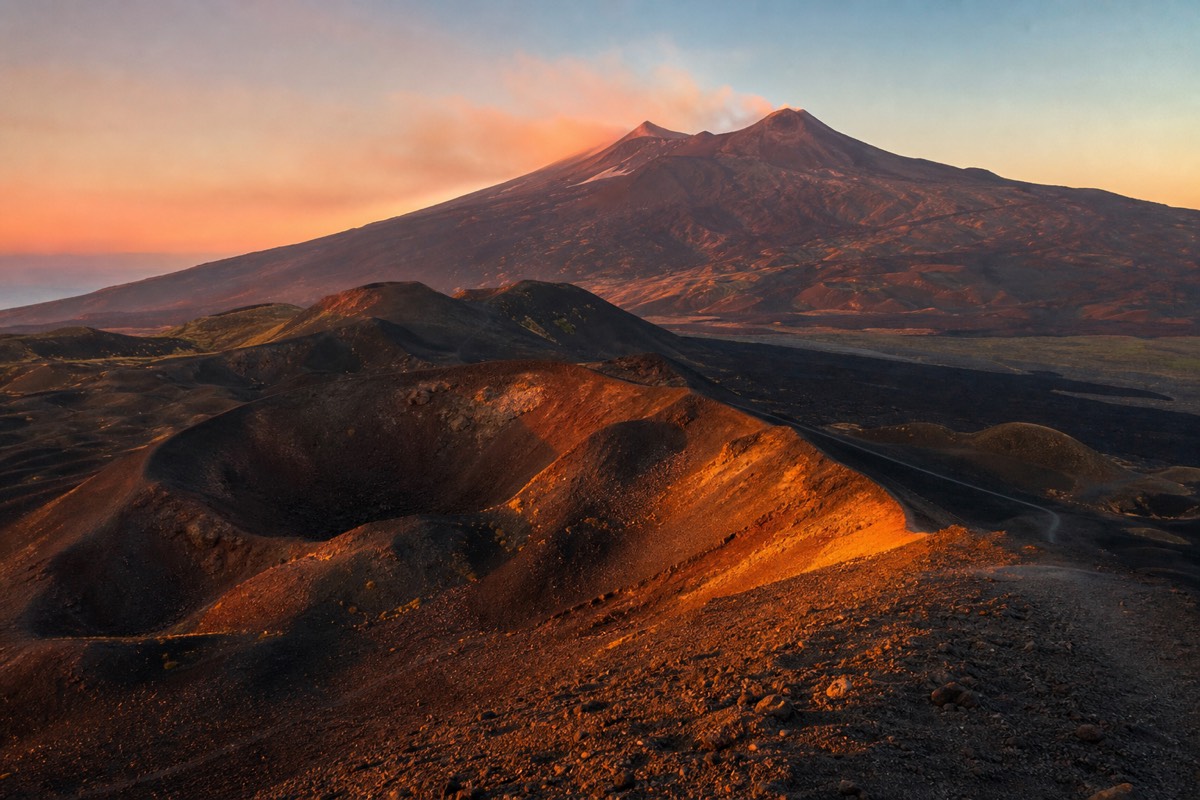
Rifugio Sapienza is a real mountain settlement, not a scenic pull-off. There is a car park, a row of restaurants, stalls selling lava-rock jewellery, and the lower station of the Funivia dell'Etna cable car. Plenty of Sicilians drive up on a Sunday with no plan beyond lunch and a walk around the lower Silvestri Craters, a set of dormant cones a short stroll from the Nicolosi road. Anyone can wander that loop unguided, at any hour, for free. If your Etna ambitions stop at seeing a volcano up close and taking photos near a crater rim, you genuinely do not need to book anything.
The visitors who do the base area alone tend to fall into a few groups: Sicilians who grew up with Etna as a weekend drive, budget travelers stretching a trip across several stops, and repeat visitors who already did a guided summit trip once and now want a slower, cheaper return visit. None of that requires special equipment beyond what common sense suggests: sturdy closed shoes rather than sandals, water, and sun protection, since the sun at 1,900 metres is stronger than it feels at sea level even on a short walk.
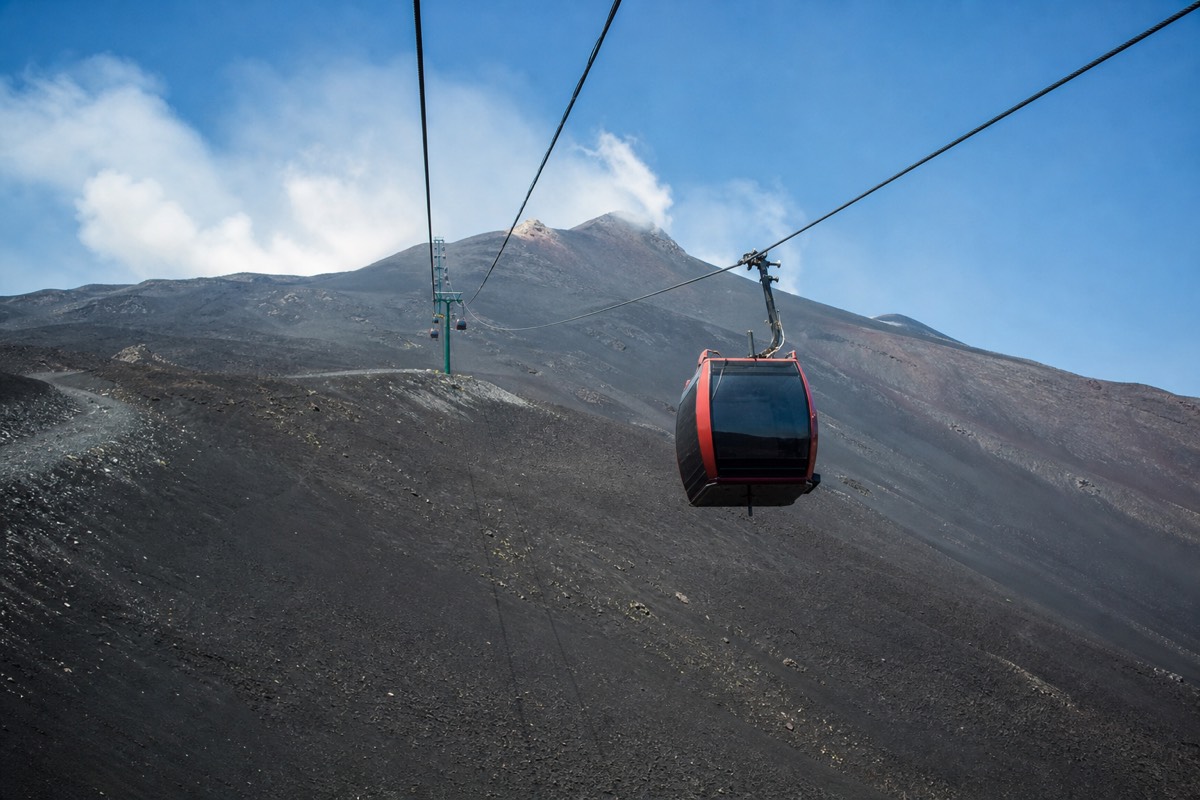
What changes the calculation is altitude and direction. The cable car carries you from 1,900 metres to roughly 2,500 metres at La Montagnola. Past that station, every route that continues upward toward the active summit area, whether by 4x4 bus or on foot, runs with a guide. That is not a rule the tour operators invented to sell trips. It reflects how access is managed on a volcano that erupts fairly often and can shift from quiet to smoking within a single afternoon.
| Zone | Approx. elevation | Can you go without a guide? | What is there |
|---|---|---|---|
| Silvestri Craters, near Nicolosi | ~1,900m | Yes, unguided, any time | Dormant cones, short walking loops, cafes and parking |
| Rifugio Sapienza | ~1,900m | Yes, unguided | Cable car base station, restaurants, marked trailheads |
| Cable car ride to La Montagnola | ~1,900m to 2,500m | Yes, buy a ticket on-site | Views over the Valle del Bove and the Ionian coast |
| 4x4 bus to the upper slopes | ~2,500m to 2,900m | No, a guide is bundled into the ticket | A close walk near the Central Craters |
| Summit trek to 3,000m-3,400m | Up to ~3,400m | No, certified volcanological guide required | The active crater zone itself |
Where does independent access actually stop, and why?
Access stops being self-service the moment a route points toward the active crater zone. Whether you go up by cable car and 4x4 or hike from Rifugio Sapienza on foot, reaching the summit craters means going with a certified volcanological guide, standard practice at active volcanoes and written into how every operator on the mountain runs its summit trips.
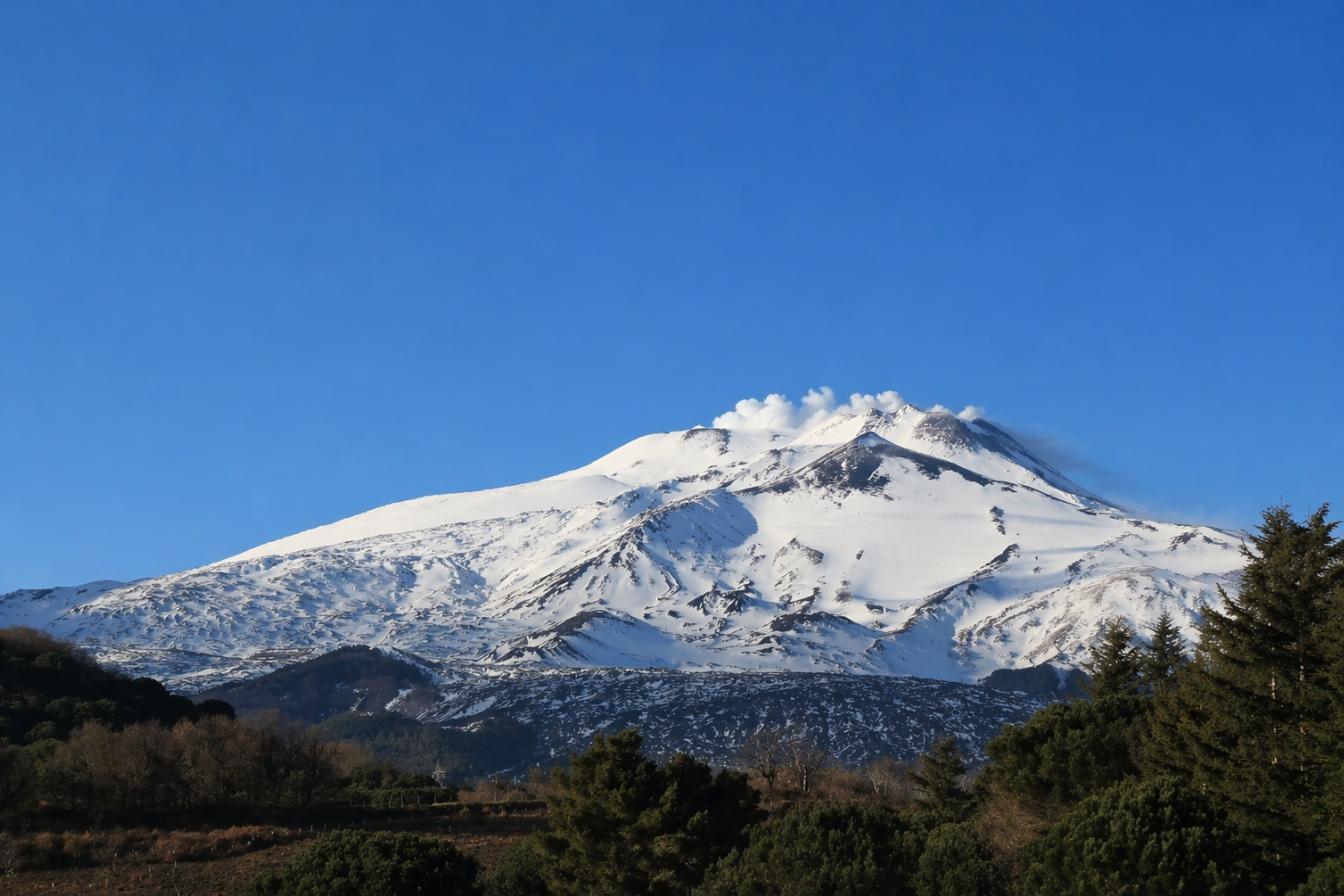
The site's own tour listings make the rule explicit rather than implicit. The guided summit trek to 3,400 metres is run with a certified volcanological guide specifically for the Central Craters route, helmet and safety insurance included. The cable car and 4x4 combination ticket bundles an Alpine guide into the price for the walk near the summit, not as an upsell but because that is how the walk is permitted to happen. The reasons are practical rather than bureaucratic: gas emissions shift with the wind, the ground near active vents is genuinely unstable, and weather at 2,900 metres can turn in twenty minutes in a way that looks like nothing from the car park below.
Because Etna's activity level changes, so does exactly how far independent visitors can go in a given month. During quieter periods the upper station and 4x4 routes run close to normal. During heightened activity, operators and the cable car company can pull the ceiling down further, sometimes closing the summit routes for guided groups too. If you are planning a trip weeks out, it is worth checking current conditions directly with funiviaetna.com or Sicily's own volcano observatory, INGV Osservatorio Etneo, rather than assuming the access described here is fixed for all time.
It helps to understand what "certified volcanological guide" actually means in practice, since it is not simply a local with a permit. These guides are trained to read gas hazard signs, know current lava flow positions from day to day, and coordinate with rescue services if conditions change mid-walk. Etna is one of the most closely watched volcanoes anywhere, with a network of seismic and gas-monitoring stations run by INGV feeding data continuously, and the guides working the upper slopes are plugged into that information in a way an independent hiker with a phone signal is not.
| Tier | Route | What you need |
|---|---|---|
| Tier 1: base area | Rifugio Sapienza, lower Silvestri Craters | Nothing, walk in freely |
| Tier 2: cable car | 1,900m to 2,500m by cable car | A ticket, bought independently or through a tour |
| Tier 3: upper slopes | 2,500m to ~2,900m by 4x4 | A guided ticket, guide included in the price |
| Tier 4: summit craters | Up to ~3,400m on foot | A certified volcanological guide, booked directly with an operator |
How do you get yourself to Rifugio Sapienza?
From Catania it is a manageable drive, roughly 45 minutes to an hour up through Nicolosi, longer with a stop at the Silvestri Craters on the way. From Taormina expect closer to an hour and a half around the mountain's eastern side. Parking at Rifugio Sapienza fills fast on clear weekends, so an early start matters more than which route you take.
The road up from Catania climbs steadily through vineyards and pistachio groves before the landscape turns black. Nicolosi, the last real town before the tree line, is worth a slow pass through even if you are not stopping; it is also the departure point for the site's quad tour on Mount Etna, which starts near the Crateri Silvestri restaurant bar at 2,000 metres. From Taormina the drive wraps around Etna's eastern flank rather than cutting straight through the middle, which is why the time gap is bigger than the map distance suggests.
Once you arrive, parking is the real bottleneck, not the road. On a clear Saturday in shoulder season the main lot at Rifugio Sapienza can fill by mid-morning, pushing latecomers into informal overflow parking further down the access road. None of this is dangerous, just slow, and it is the single most common complaint from independent visitors: not the mountain, the queue for a spot to leave the car.
The drive itself is part of the experience rather than a chore to rush through. The road climbs through a series of hairpin bends with pull-offs where the tree line thins and the black volcanic ground first becomes visible, and most independent visitors stop at least once before reaching Rifugio Sapienza. Weekday mornings are consistently quieter than weekends, and if your schedule allows it, a Tuesday or Wednesday visit avoids most of the parking pressure described above without needing to arrive at dawn.
| Starting point | Approx. drive time to Rifugio Sapienza | Route |
|---|---|---|
| Catania | Roughly 45 minutes to 1 hour | SP92 through Nicolosi |
| Nicolosi | Roughly 20-30 minutes | SP92 continuing up-slope |
| Taormina | Roughly 1.5 hours | A18 then the SP92 via the eastern flank |
Rental car or public transport: which one actually gets you there?
A rental car is the realistic option for independent visitors. Public transport to Rifugio Sapienza exists in the form of a seasonal bus service from Catania, but it runs on a limited daily schedule that rarely lines up cleanly with a full day on the mountain, while a car gives you control over timing, the Silvestri Craters stop, and the drive back.
Sicily's public bus network reaches Nicolosi reliably, since it is a real town with normal daily services, but the onward leg up to Rifugio Sapienza itself is thinner: a limited seasonal route run by the regional operator, typically once or twice a day, aimed more at locals and hikers with flexible schedules than at visitors working around a single free day. If you are staying in Catania without a car, it is worth checking the current timetable directly rather than assuming a bus will be waiting when you want one.
Renting a car removes that uncertainty and adds real flexibility: a stop at the Silvestri Craters on the way up, the option to leave whenever the queue for the cable car looks manageable, and a way to get back down if weather turns before you expected. The road itself is manageable for anyone comfortable with mountain driving, well-paved and clearly signed, though narrow in a few stretches near Nicolosi. Fuel up before you leave Catania or Nicolosi; there is nothing resembling a full-service station once you are on the upper access road.
What gear do you actually need for a DIY day?
Sturdy closed shoes, a genuine warm layer, and cash or a card for on-site tickets and food cover most of what an independent visitor needs. You do not need a helmet or technical gear for the self-service zone, since that equipment only becomes relevant on the guided routes above La Montagnola, where operators provide it.
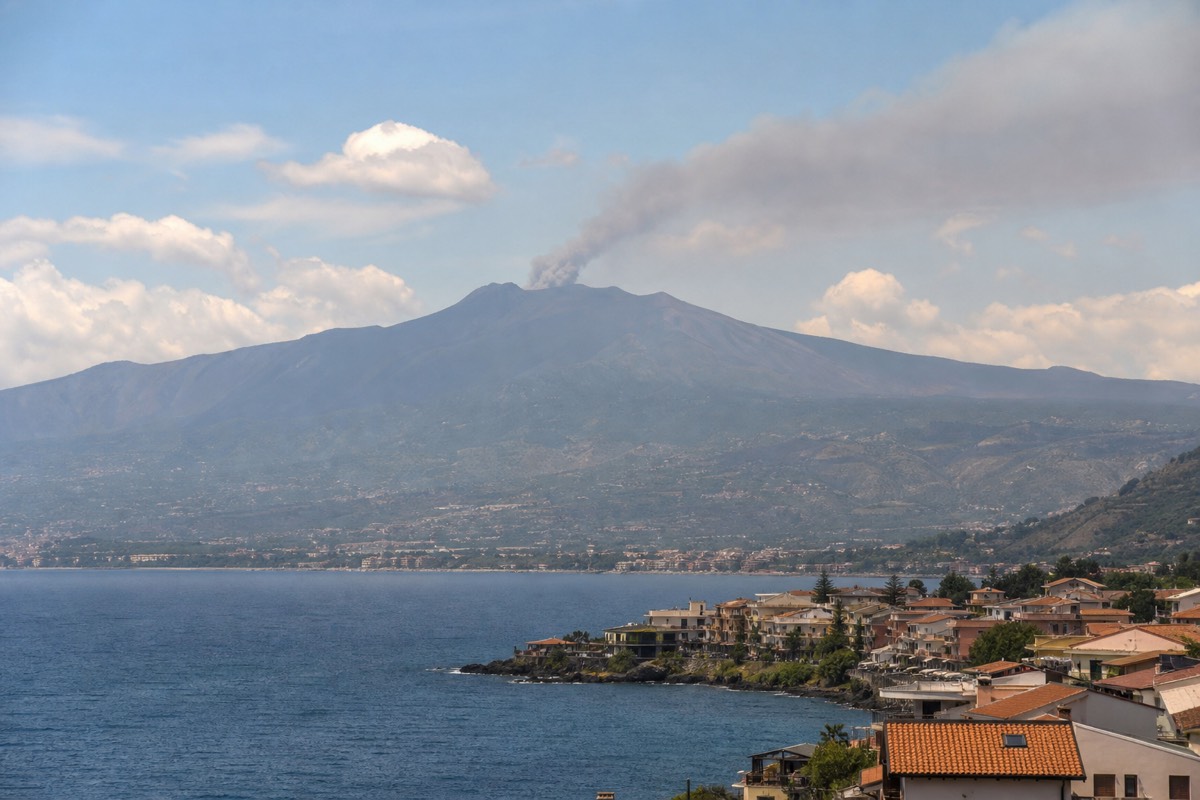
The single most common gear mistake is underestimating the cold. Catania at sea level and Rifugio Sapienza at 1,900 metres can differ by 10 degrees Celsius or more, and wind at the mid-station adds to that even on a clear day. A packable windbreaker and a warm layer, even in what feels like a warm Sicilian summer at the coast, are worth carrying rather than assuming you will not need them.
Beyond warmth, keep the list simple: closed-toe shoes with some grip for the ash and gravel around the Silvestri Craters and the cable car station, sunglasses and sun protection since there is little shade above the tree line, water, and cash in smaller denominations for the cable car ticket window and the informal vendors near the car park. None of the equipment the guided tours include (helmets, poles, jackets) is required for a day that stays within the independent zone described above.
A realistic hour-by-hour DIY day at Rifugio Sapienza
Leaving Catania by 8am gives a realistic full day: roughly an hour on the road with a stop at the Silvestri Craters, a mid-morning cable car ride once the early queue thins, a couple of hours around La Montagnola and the mid-station, lunch back at Rifugio Sapienza, and a return drive that beats the worst of the afternoon parking crunch.
Here is what that actually looks like in practice. Depart Catania around 8:00am and reach Nicolosi by roughly 8:45, with time for a short stop at the Silvestri Craters on the way through if the parking cooperates. Arrive at Rifugio Sapienza by 9:15 to 9:30, ahead of the mid-morning crowd that tends to build by 10:30 on clear weekends. Buy a cable car ticket at the base station, expect a wait if it is a busy day, and plan to be riding up by around 10:00. The ride itself takes roughly 15 minutes, leaving the rest of the late morning, until about 12:30, free to walk around La Montagnola and take in the views over the Valle del Bove before the cable car back down.
Aim to be back at Rifugio Sapienza for a late lunch around 1:00pm, when the restaurant crowd has usually thinned from its peak. Leave the mountain by early-to-mid afternoon, ideally before 3:00pm, both to avoid the worst of the departing traffic and because afternoon cloud can build quickly around the upper station in warmer months. That structure leaves a comfortable buffer and does not depend on catching the cable car at its single busiest hour.
What does the cable car cost if you buy it yourself?
Compare the current quote for your date and option, adding any excluded lifts, transport or meals. Both are bought at the base station or in advance, and both prices drift with the season, so treat these as a planning baseline rather than the number you will pay on the day.
Buying independently at Rifugio Sapienza means joining whatever queue is there that morning, which on a busy day can add a genuine hour before you even reach the cable car cabin. A booked ticket, whether standalone or as part of a guided tour, usually comes with a skip-the-line lane. That single difference is often what tips visitors toward pre-booking even when they intend to explore mostly on their own once they are up there.
For the full breakdown of ticket tiers, operating hours, and what each stage of the ascent actually looks like, see the site's dedicated Mount Etna cable car guide, which covers the mechanics of the ride in more depth than makes sense to repeat here.
One detail worth knowing before you go: the ticket office at Rifugio Sapienza sometimes offers a discounted resident rate for Sicilian ID holders, but that discount is only available buying in person, never through online booking. It is a minor point for most visitors, but it explains why the price you see quoted online is not always the lowest price theoretically available at the window, and why locals sometimes pay less than the figures above suggest.
| Ticket type | What is included | Approx. price | Guide included? |
|---|---|---|---|
| Cable car round trip only | Rifugio Sapienza to La Montagnola and back | Around date-specific quote | No, self-guided at that elevation |
| Cable car + 4x4 + guide | Full ascent to ~2,900m with a guided walk near the craters | Around date-specific quote | Yes, bundled in |
| Guided summit trek | Trek to 3,000m or 3,400m with a certified guide, cable car fees paid on-site | From date-specific quote tour price, plus on-site cable car/4x4 fees | Yes, throughout |
DIY vs a guided tour: the honest cost and effort comparison
Compare the current quote for your date and option, adding any excluded lifts, transport or meals. Once you want to reach the actual craters, the cost gap narrows sharply, because the guide fee is unavoidable either way, and the tour adds transport, safety kit, and local knowledge for a modest premium.
The clearest way to see this is to compare what a self-driven day at Rifugio Sapienza costs against a guided day that reaches the same or higher ground. A DIY visitor pays for fuel, parking, the cable car, and nothing else, but caps out at the mid-station unless they also pay the 4x4-and-guide fee on-site, which is the same fee a tour bundles in from the start. A guided tour adds the price of the tour itself, but removes the need to navigate ticket queues, coordinate transport, or work out on the fly whether conditions are safe to go higher that day.
Where the guided option pulls ahead is not really price, it is certainty. Tour groups get a fixed slot, a guide who already knows if the upper routes are open that morning, and equipment (helmets, sturdy boots, sometimes trekking poles) included in the price rather than something you have to own or rent. For a full side-by-side of what each of the six tours costs and includes, see how much a Mount Etna tour costs.
Put a number on it with a worked example. Compare the current quote for your date and option, adding any excluded lifts, transport or meals. Compare the current quote for your date and option, adding any excluded lifts, transport or meals. Compare the current quote for your date and option, adding any excluded lifts, transport or meals.
| Approach | Cash cost | What you get | Effort required from you |
|---|---|---|---|
| DIY to Rifugio Sapienza + cable car | Fuel, parking, ~date-specific quote cable car | Views to ~2,500m, no crater access | Drive, park, queue for tickets |
| DIY + on-site 4x4/guide fee | Fuel, parking, ~date-specific quote combined | Walk near the Central Craters | Same as above, plus on-site booking risk if slots sell out |
| Booked guided tour | Tour price (date-specific quote depending on tour) plus any on-site fees | Fixed slot, gear, transport, local knowledge | Show up at the meeting point |
What can actually go wrong if you go it alone?
The most common independent-visitor problems are not dramatic: full parking lots, sold-out cable car slots, and being caught at 2,500 metres in a windbreaker built for the coast. The more serious risks, gas exposure and sudden weather at altitude, are exactly what the guide requirement above the upper station exists to manage.
Temperature swing catches more people out than anything else. It is common to leave Catania in a t-shirt and arrive at Rifugio Sapienza to genuinely cold wind, even in spring; several of the site's own tours flag a windbreaker and warm layer as a near-mandatory item, not a suggestion. Beyond that, the practical risks scale with how far you go: sold-out cable car tickets on a peak day, a closed upper station because of weather or activity with no refund guarantee for a walk-up ticket, and simply not knowing which of several marked and unmarked paths near the base are worth taking.
The genuinely serious risks (volcanic gas concentrations, unstable ground near vents, disorientation in sudden cloud) are largely confined to the upper mountain, which is precisely the ground the guide requirement covers. This is not unique to Etna; it mirrors how most active volcanoes with regular visitor access handle the same problem worldwide.
Families should also weigh a practical, less dramatic factor: age restrictions differ by tour and route, not by law for independent visits. The guided summit trek requires children to be over 6, while the full-day Hidden Trails trek sets the bar higher at over 10 given the distance and terrain involved. There is no equivalent age gate for walking around Rifugio Sapienza or the lower Silvestri Craters independently, which makes the base area a genuinely more flexible option for families with younger children who still want to see the mountain up close.
| Risk | Why it matters | How a guide reduces it |
|---|---|---|
| Sudden weather change | Wind, cloud and cold arrive fast above 2,000m | Guides carry radios and know when to turn a group back |
| Volcanic gas | Concentrations shift with wind direction near active vents | Guides route around known gas pockets in real time |
| Unstable ground | Loose gravel and ash near the crater rim | Guides know which paths are currently safe to walk |
| Sold-out or closed access | Walk-up tickets are not guaranteed on busy or unstable days | Booked tours hold reserved slots |
So who should book a guide, and who is genuinely fine alone?
If your goal is photos, the cable car view, and a walk around the Silvestri Craters, doing it yourself works fine and saves money. If you want to stand near the active craters, hike into the Valle del Bove, or ride a quad through the lava fields, you need a guide either way, so booking a tour is the more efficient route to the same place.
First-time visitors who are unsure how much mountain they actually want often do best booking anyway, even for a route they could technically do alone, simply because a guide reads the day's conditions and adjusts the plan without the visitor having to guess. Experienced hikers who mainly want the summit-adjacent scenery without a formal trek sometimes prefer the standalone cable car ticket precisely because it leaves them free to linger at their own pace at the mid-station.
For a full comparison of what each of the six tours on this site actually covers, from the two-hour quad tour to the full-day trek options, see which Mount Etna tour to choose. And if the question in your mind is really about safety rather than logistics, whether it is sensible to be on the mountain at all right now, the honest answer lives in a separate guide: is Mount Etna erupting covers what INGV actually tracks and how that maps to what tourists experience.
Photographers are a special case worth a separate word. Independent visitors get more flexibility to linger at a single viewpoint at Rifugio Sapienza or the mid-station for as long as the light holds, since nobody is managing a group schedule around them. Guided visitors trade that flexibility for reach: a guide can put you in front of the Central Craters or deep into the Valle del Bove, vantage points a standalone cable car ticket simply does not reach, whatever the light happens to be doing when you arrive.
| Traveler type | DIY works? | Recommended path |
|---|---|---|
| Wants photos and the cable car view only | Yes | Drive to Rifugio Sapienza, buy a cable car ticket on-site |
| Wants to reach the active craters | No, guide required regardless | Guided summit trek or cable car + 4x4 tour |
| Wants off-road speed over hiking | No, licence and guided route required | Quad tour on Mount Etna |
| First-time visitor, unsure of fitness or conditions | Technically yes for the base, not recommended | Book a guided option and let the guide set the pace |
Still weighing the cable car specifically against the cost of a fully guided trek? Our honest take in is the Mount Etna cable car worth it lays out exactly what the lift does and doesn't get you. And if part of your hesitation about going it alone is safety rather than cost, see what would actually happen if Mount Etna erupted for the honest picture.